MADHYA
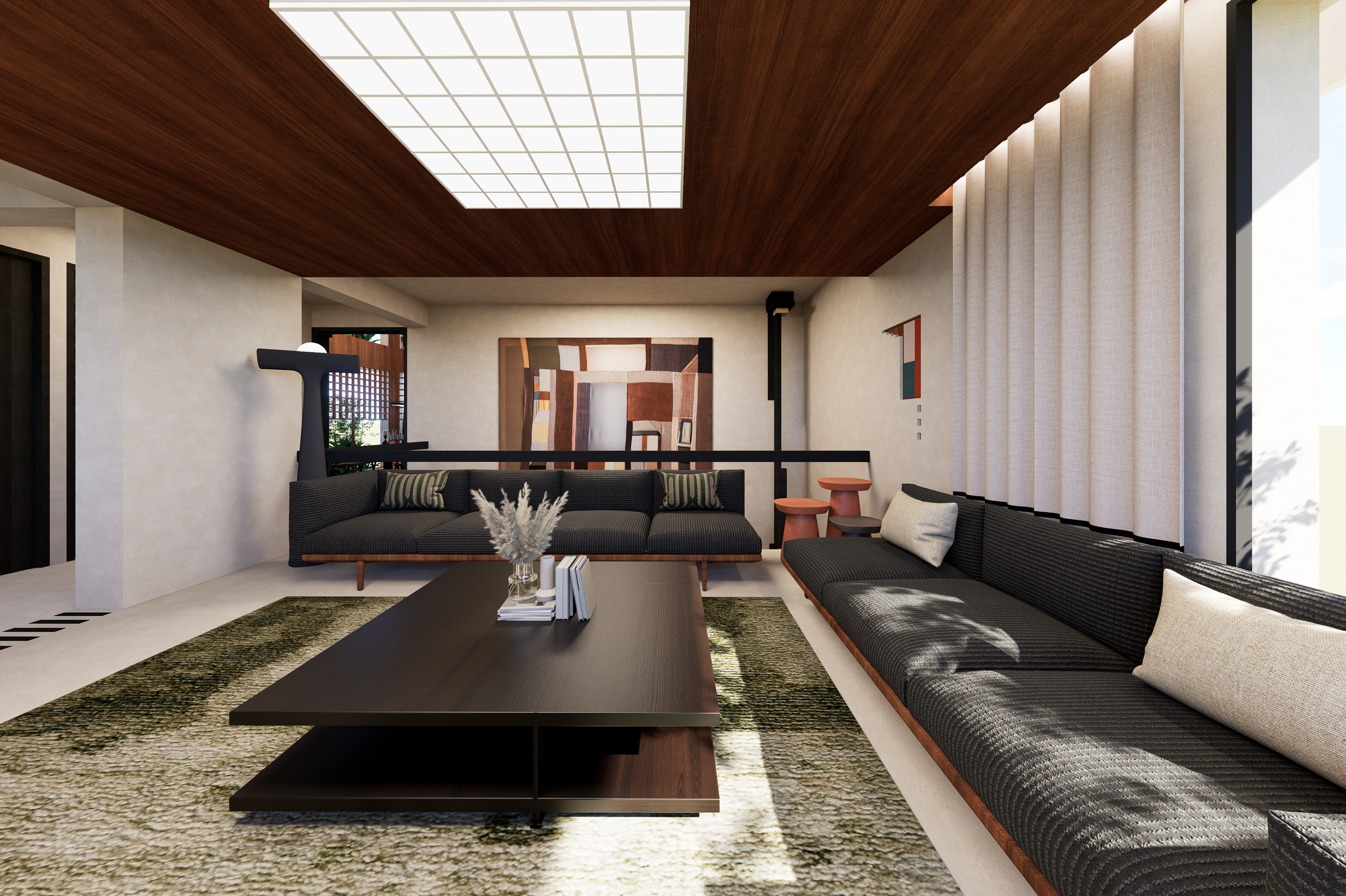
In the layered heart of Kolkata, this five-floor residence rises as more than a dwelling. It is conceived as a vertical narrative of memory and modernity, a cinematic composition that feels grounded in history yet forward in form. The home does not imitate the past, nor does it reject it. Instead, it curates it with intention. Victorian elegance, Art Deco geometry, Mid Century warmth, Modern restraint, and the quiet strength of Indian craftsmanship come together in a distilled and precise language. The result is not a collage of styles but a thoughtful harmony of contrasts where ornament meets discipline and richness meets clarity.
-
6000 SQFT
-
Residential, Private, House, Multi-floor, Interiors
-
Kolkata, West Bengal, India
palette draws Kolkata’s warmth
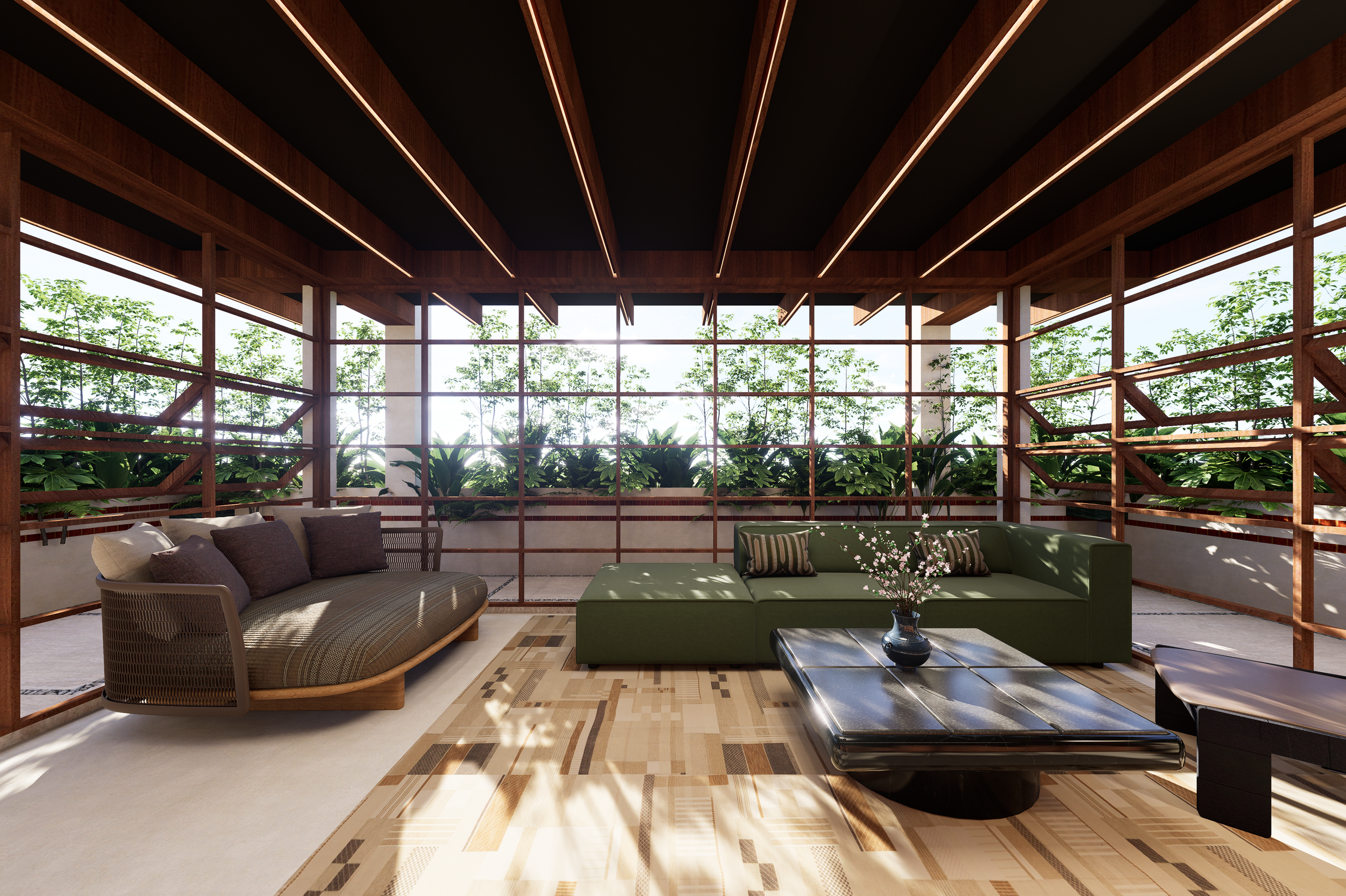
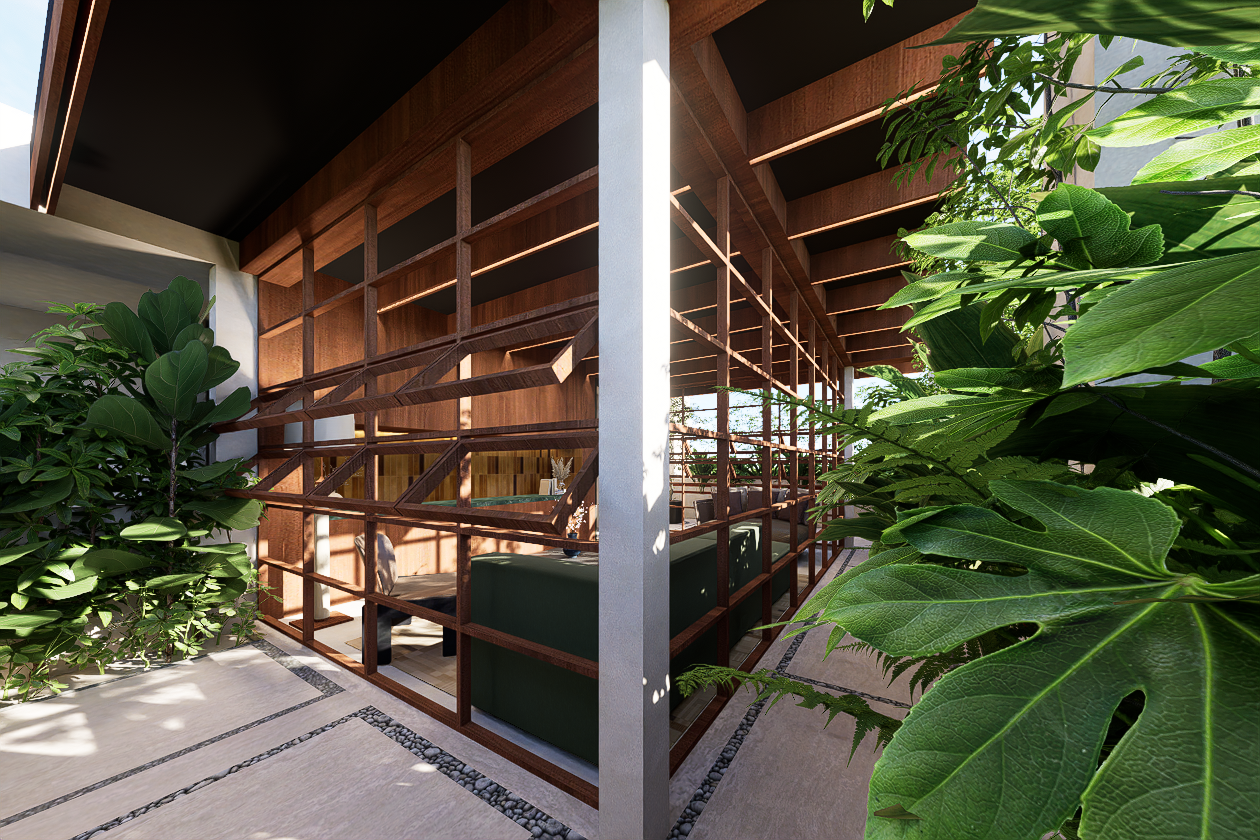
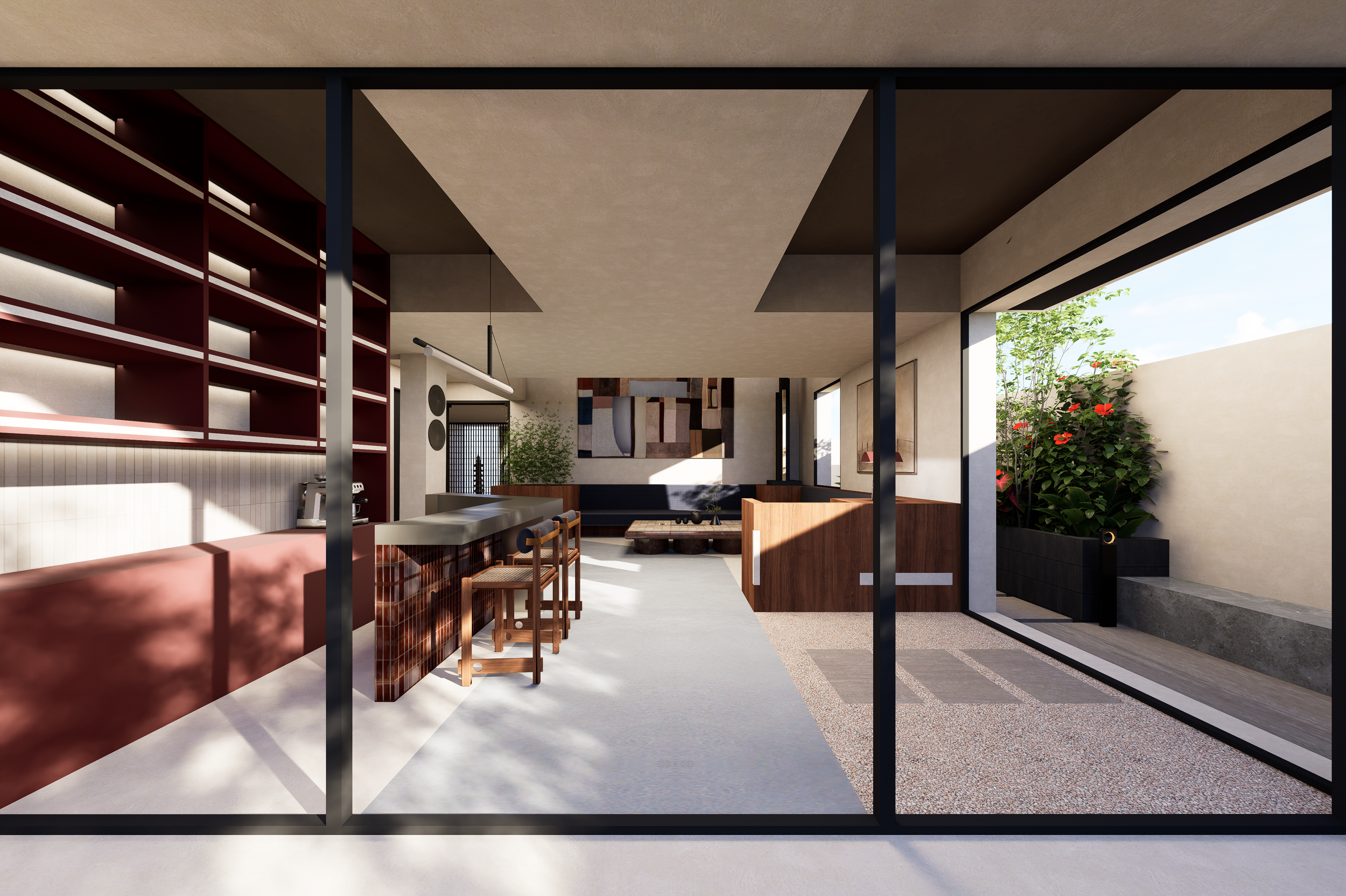
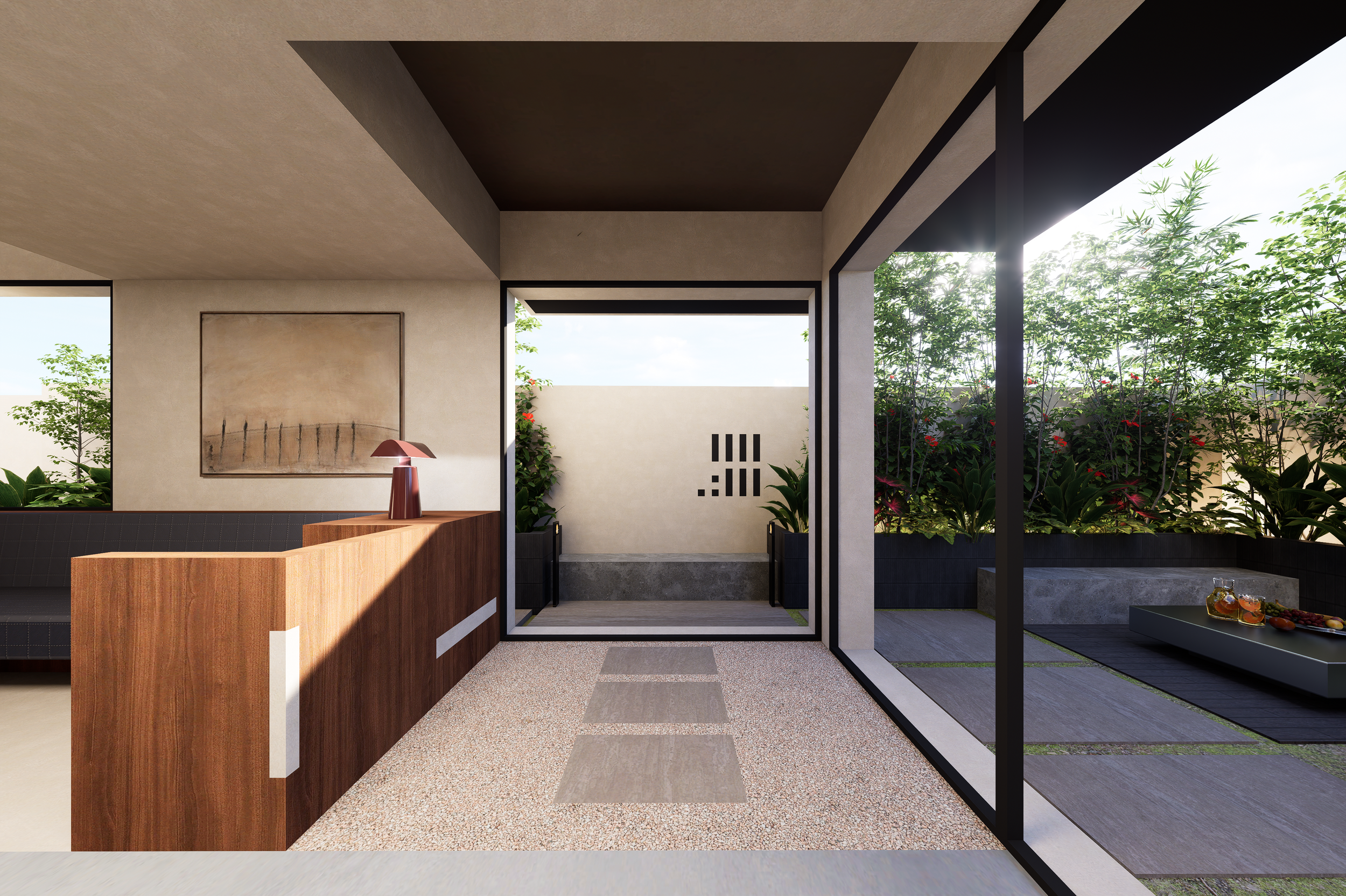
This residence is rooted in the idea that design should not overwhelm but resonate. Victorian trims and proportions are softened and abstracted, becoming shadow lines and quiet frames rather than literal reproductions. Art Deco introduces rhythm through geometry, symmetry, and sculptural lighting. Mid-century sensibilities anchor the spaces with human scale, clean silhouettes, and tactile materials. Modernism edits excess, ensuring that every gesture is deliberate. Indian craftsmanship binds it all together. Lime-washed walls, hand-carved jalis, brushed brass details, textured stone, woven cane, and worn timber become the vocabulary of emotion. Each element feels lived in and layered rather than decorative for its own sake.
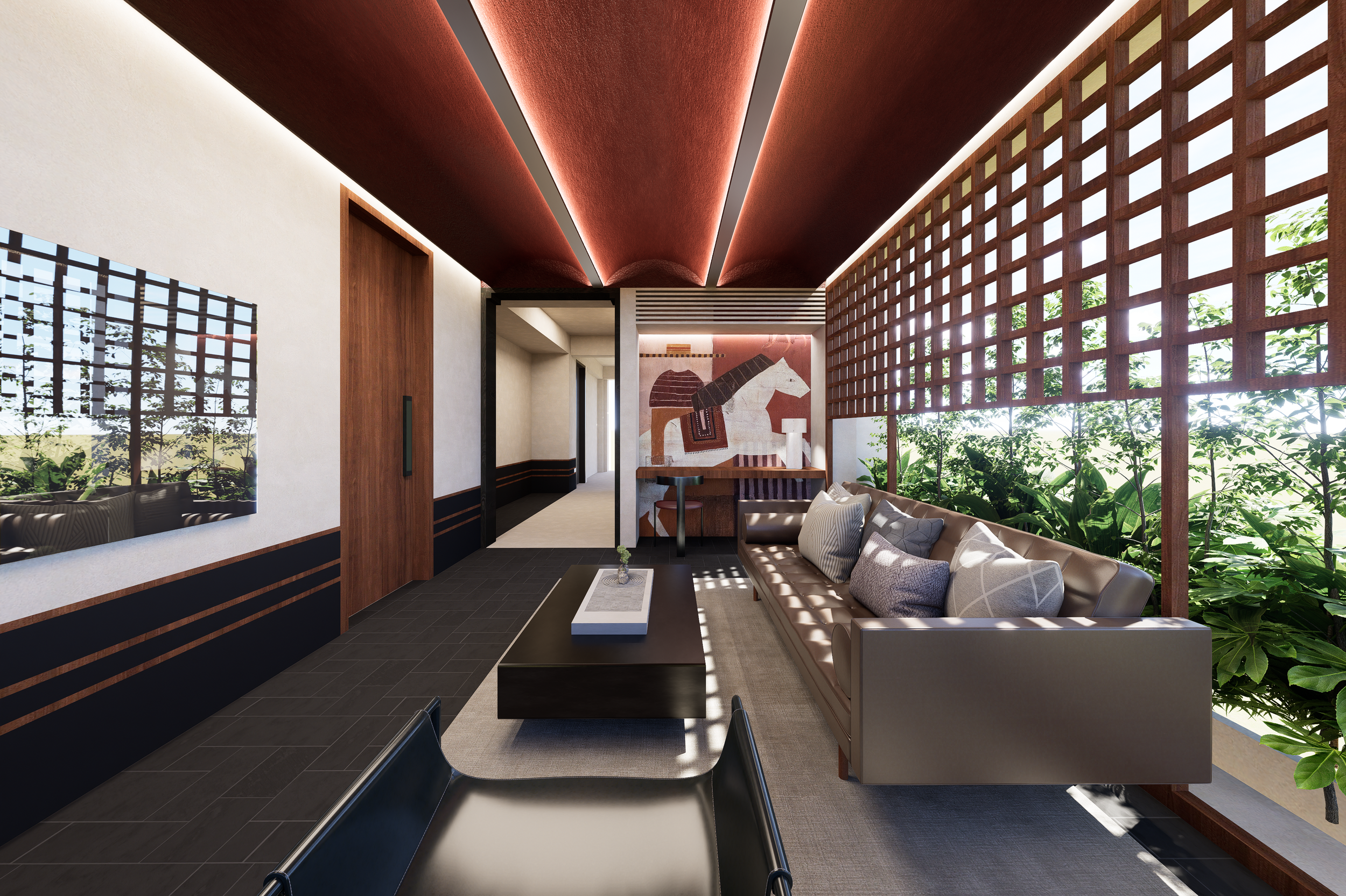
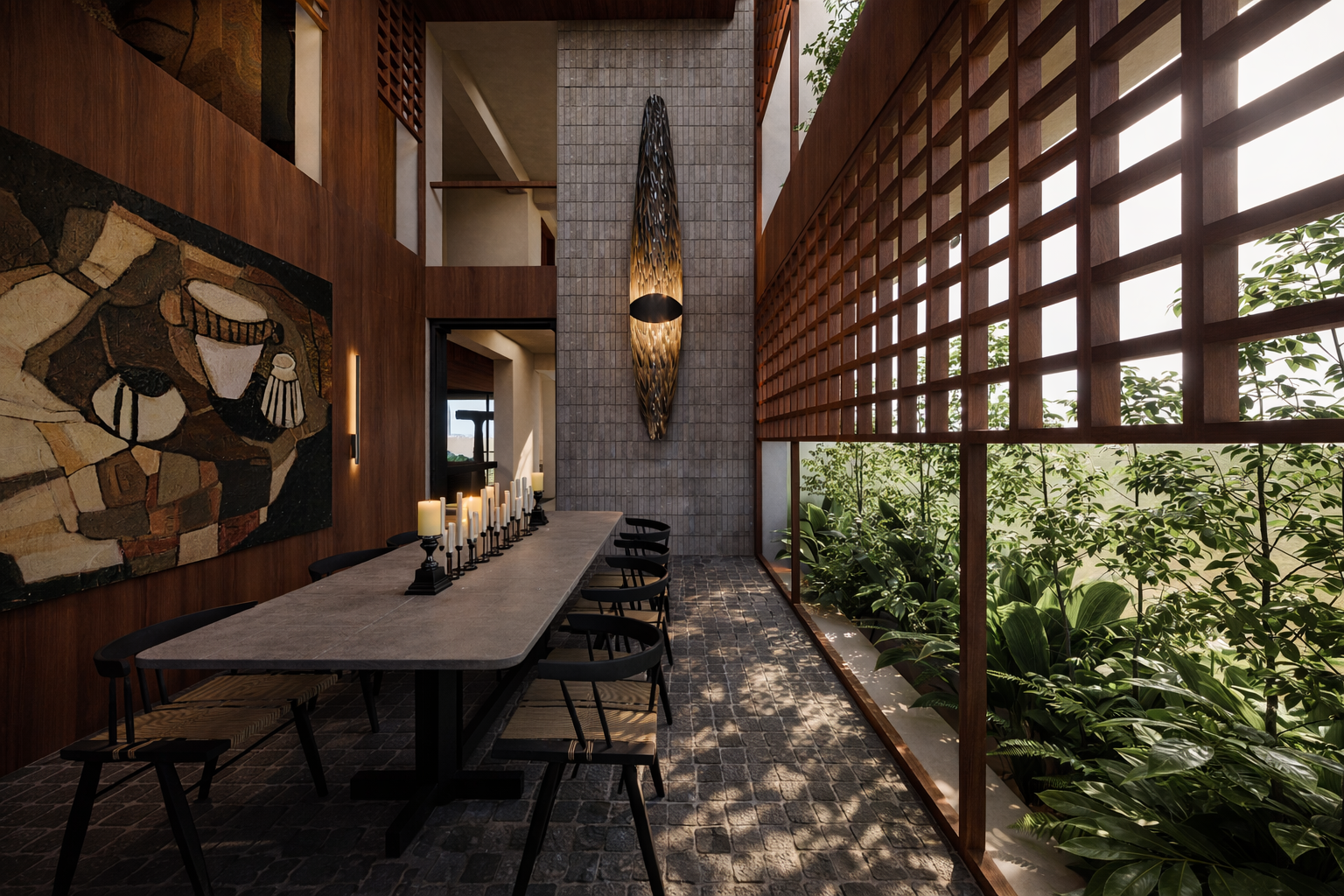
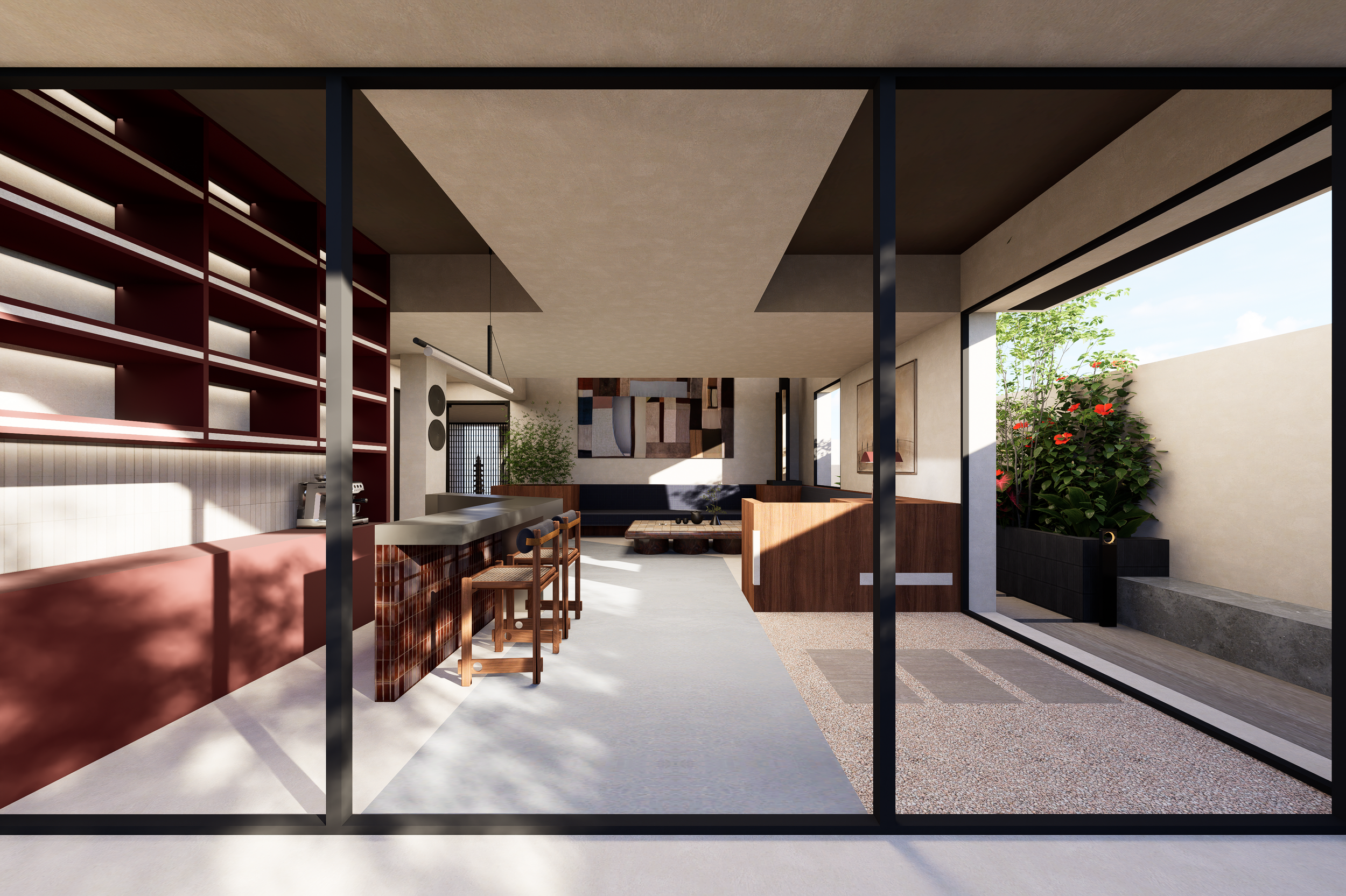
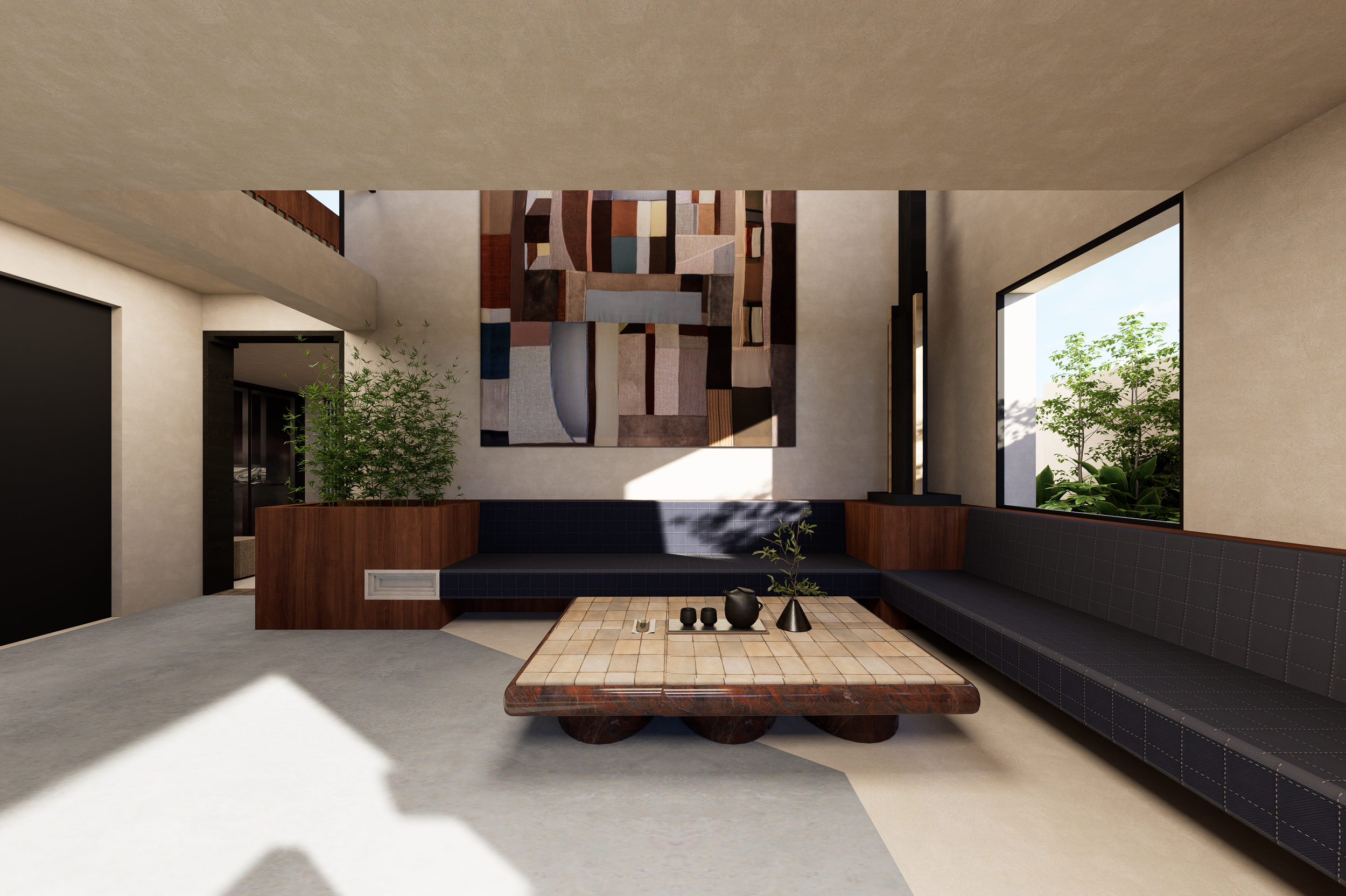
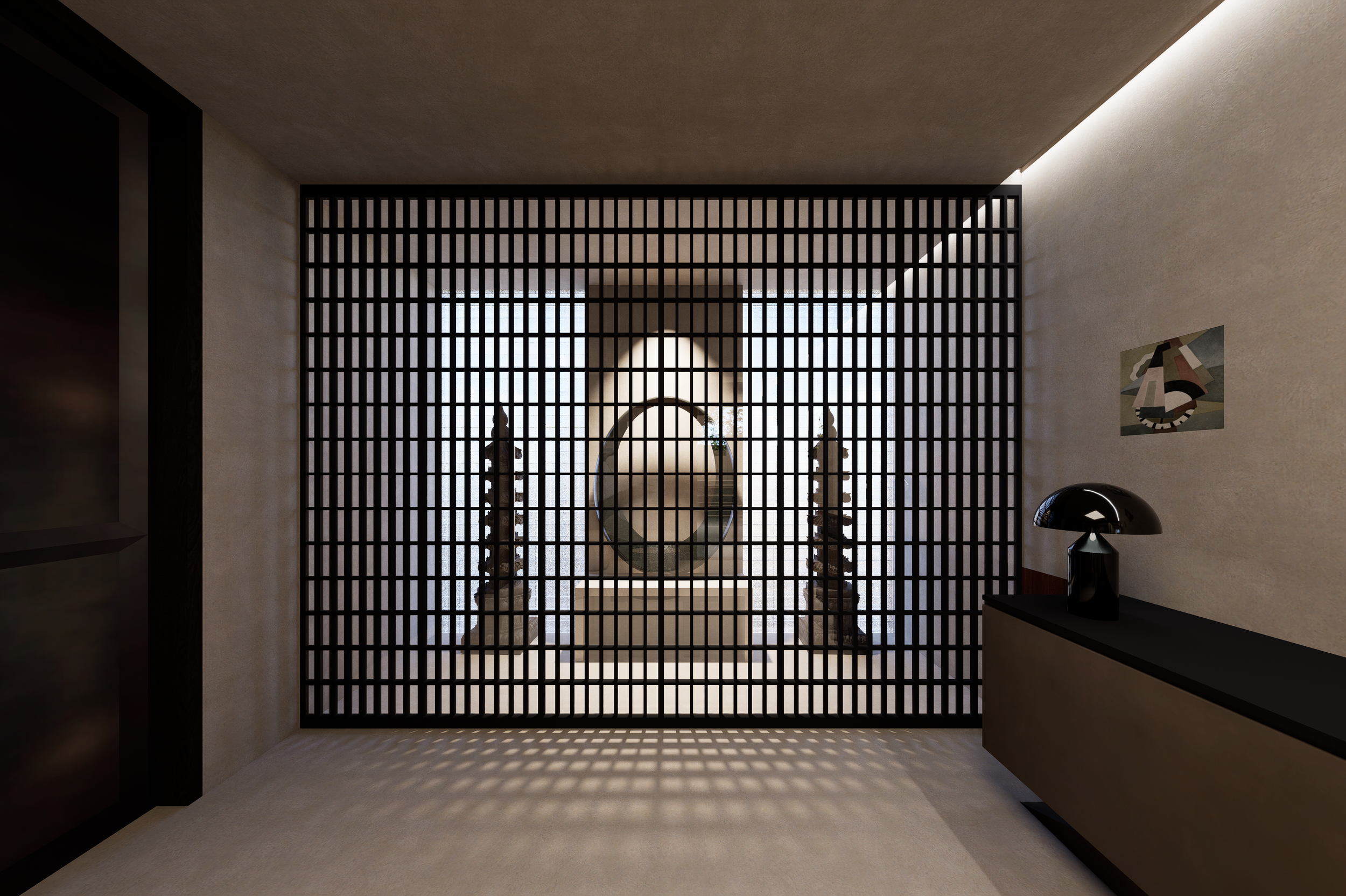
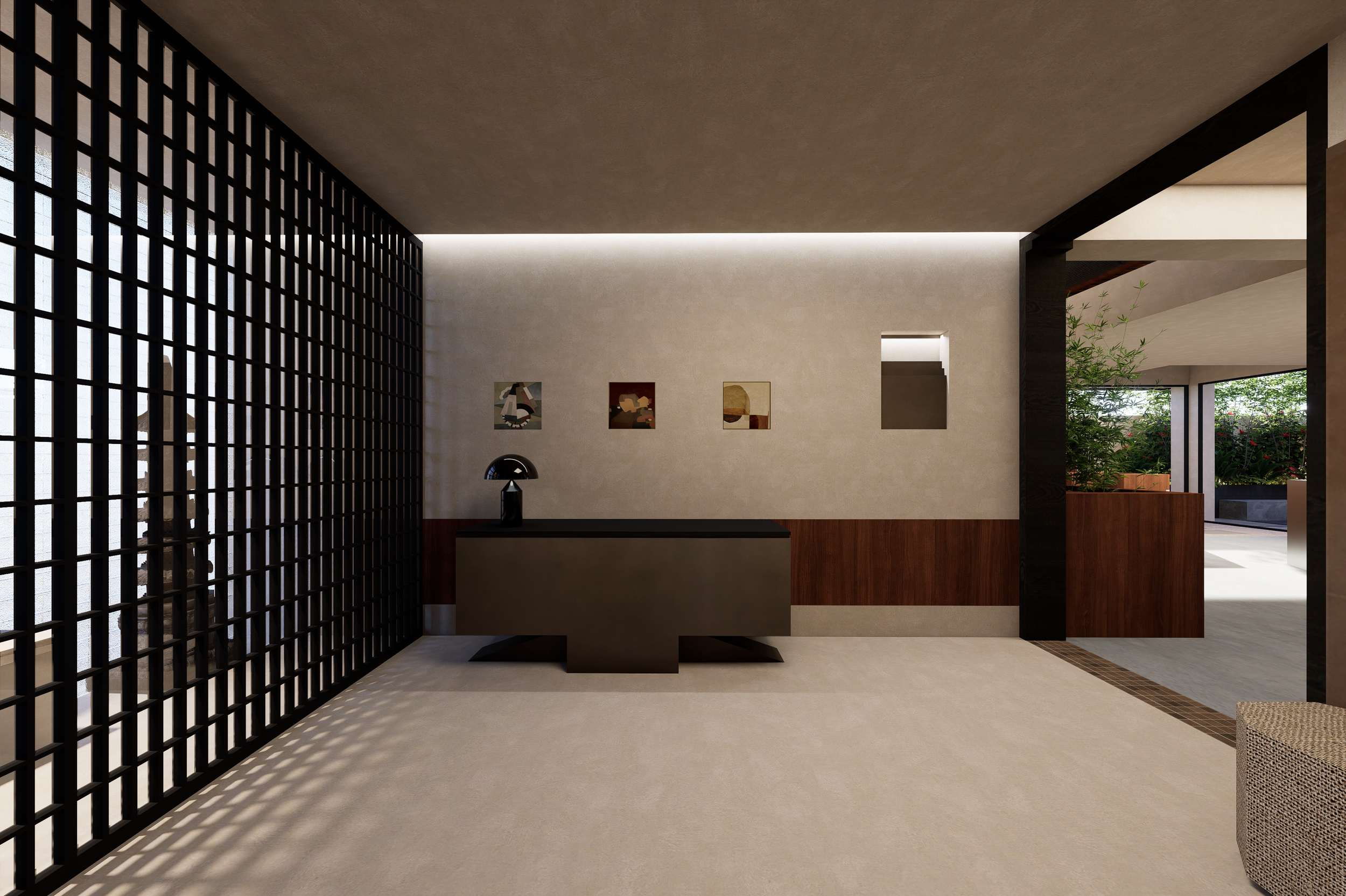
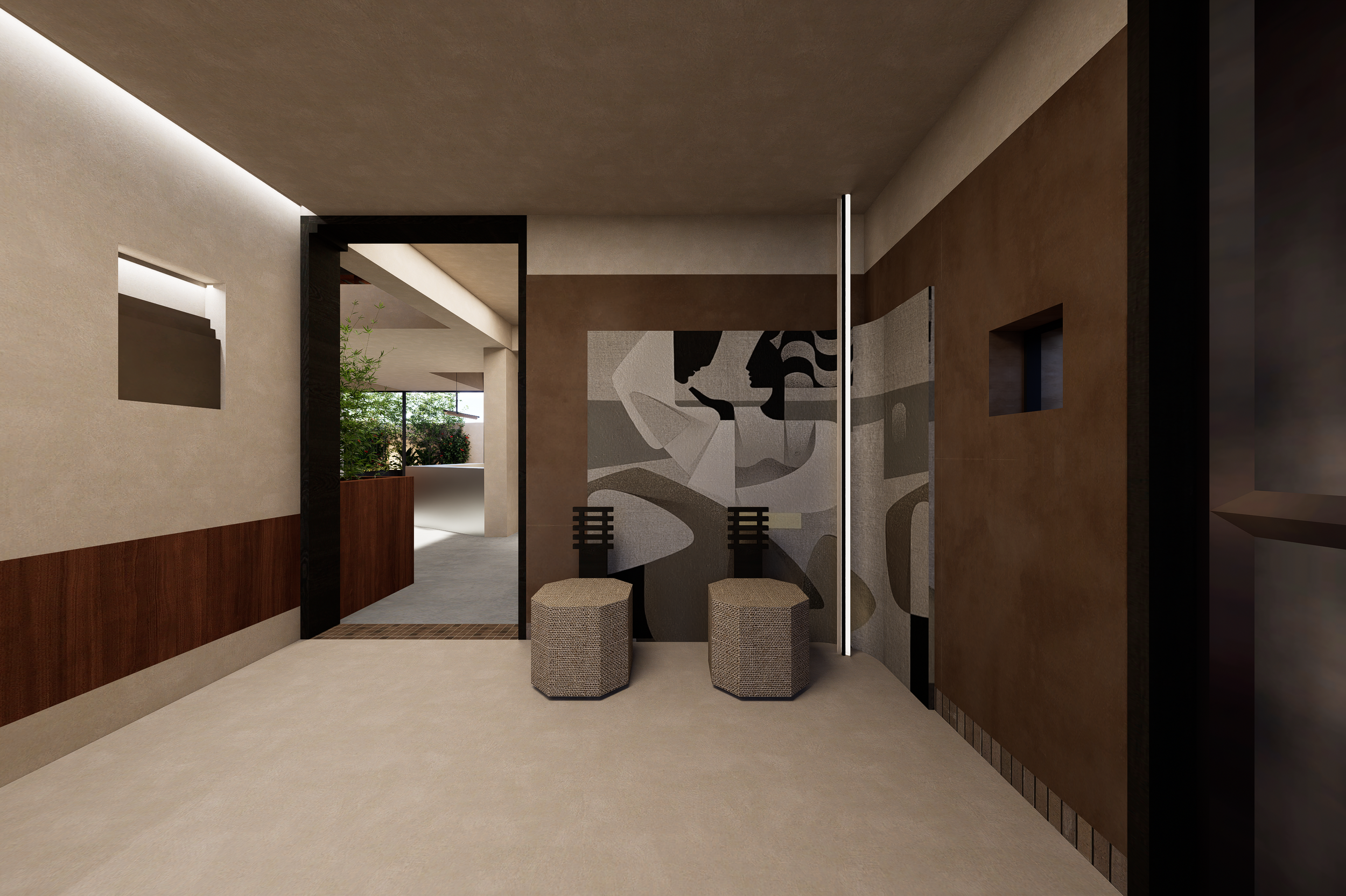
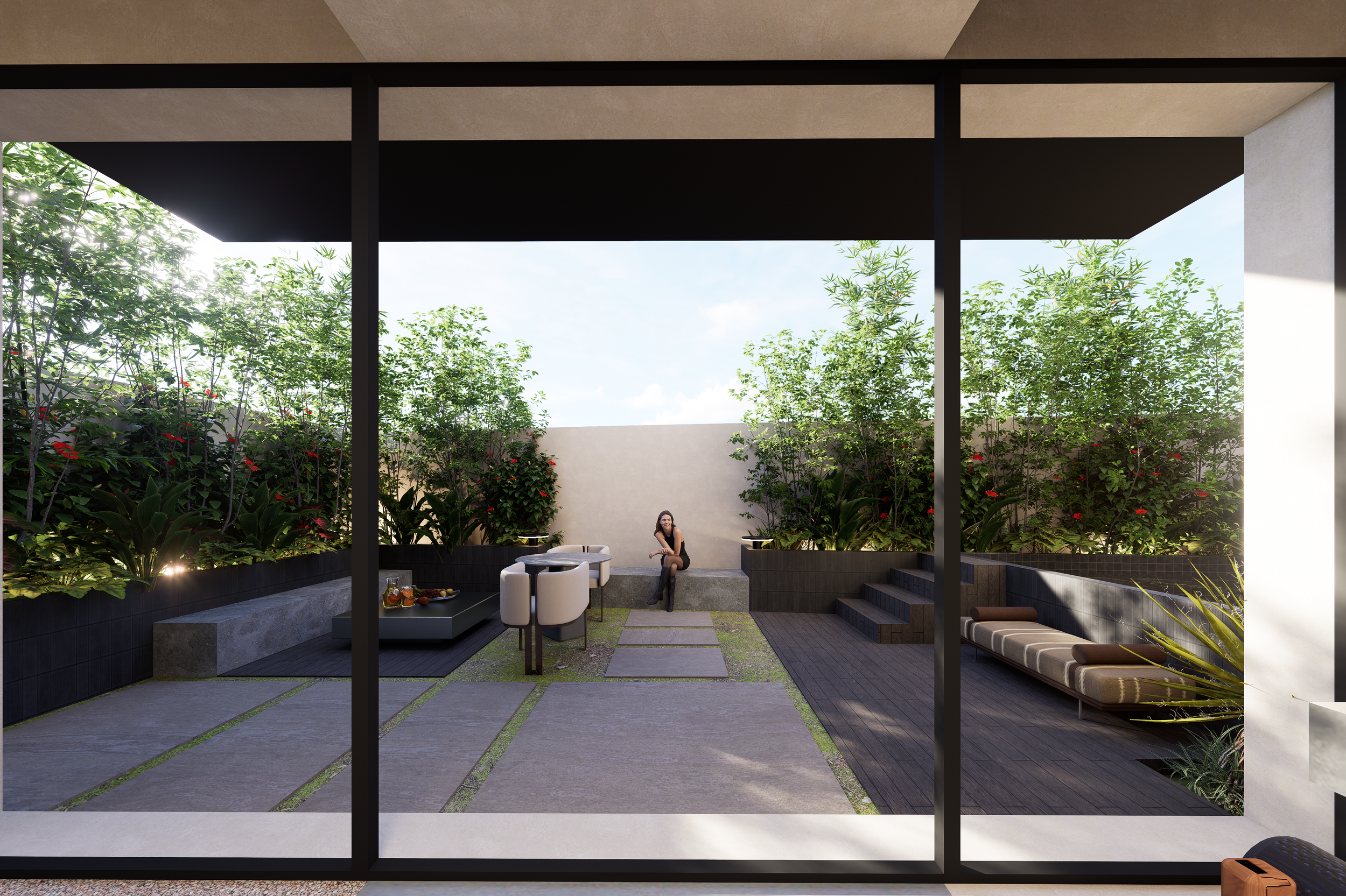
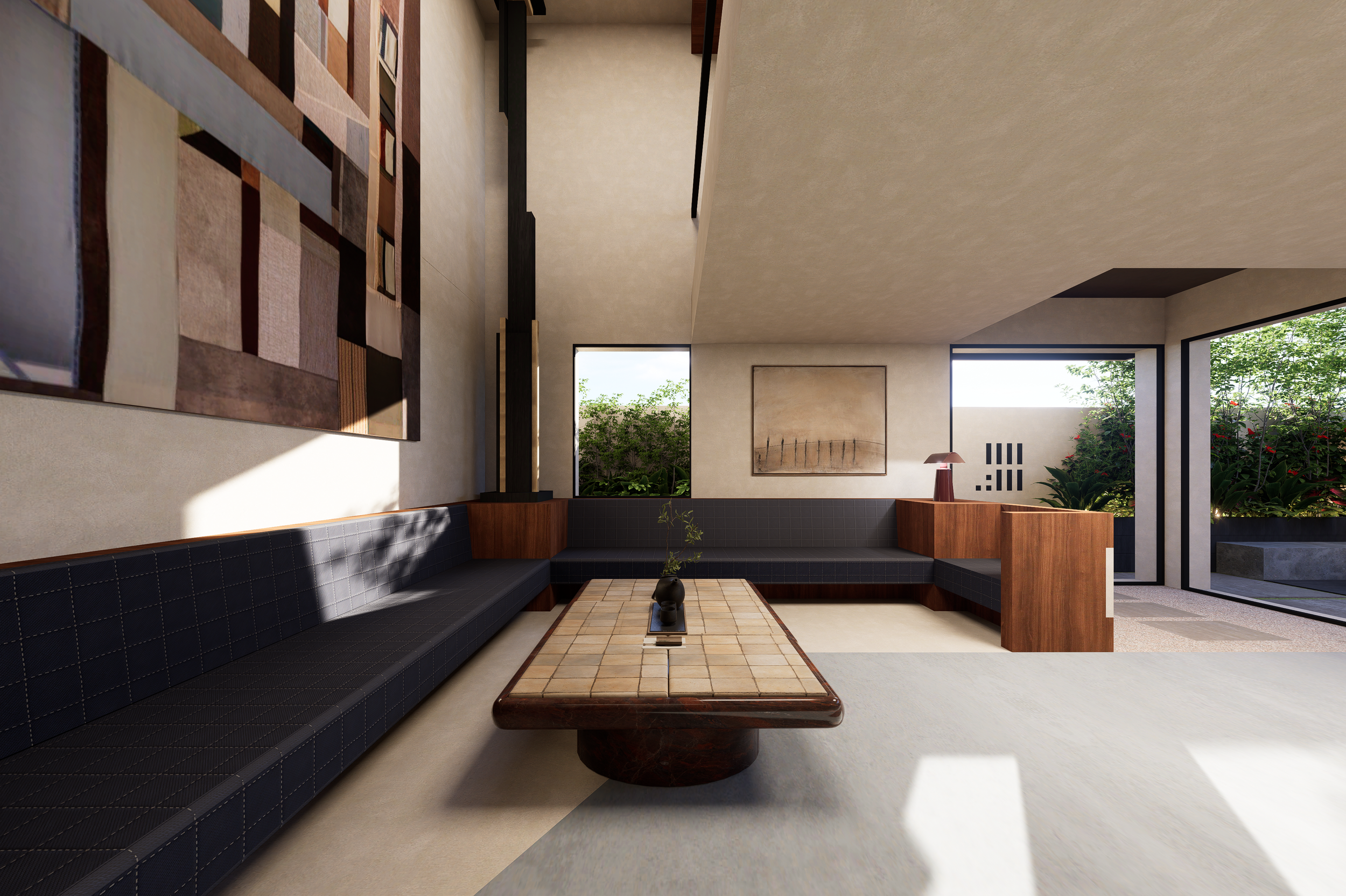
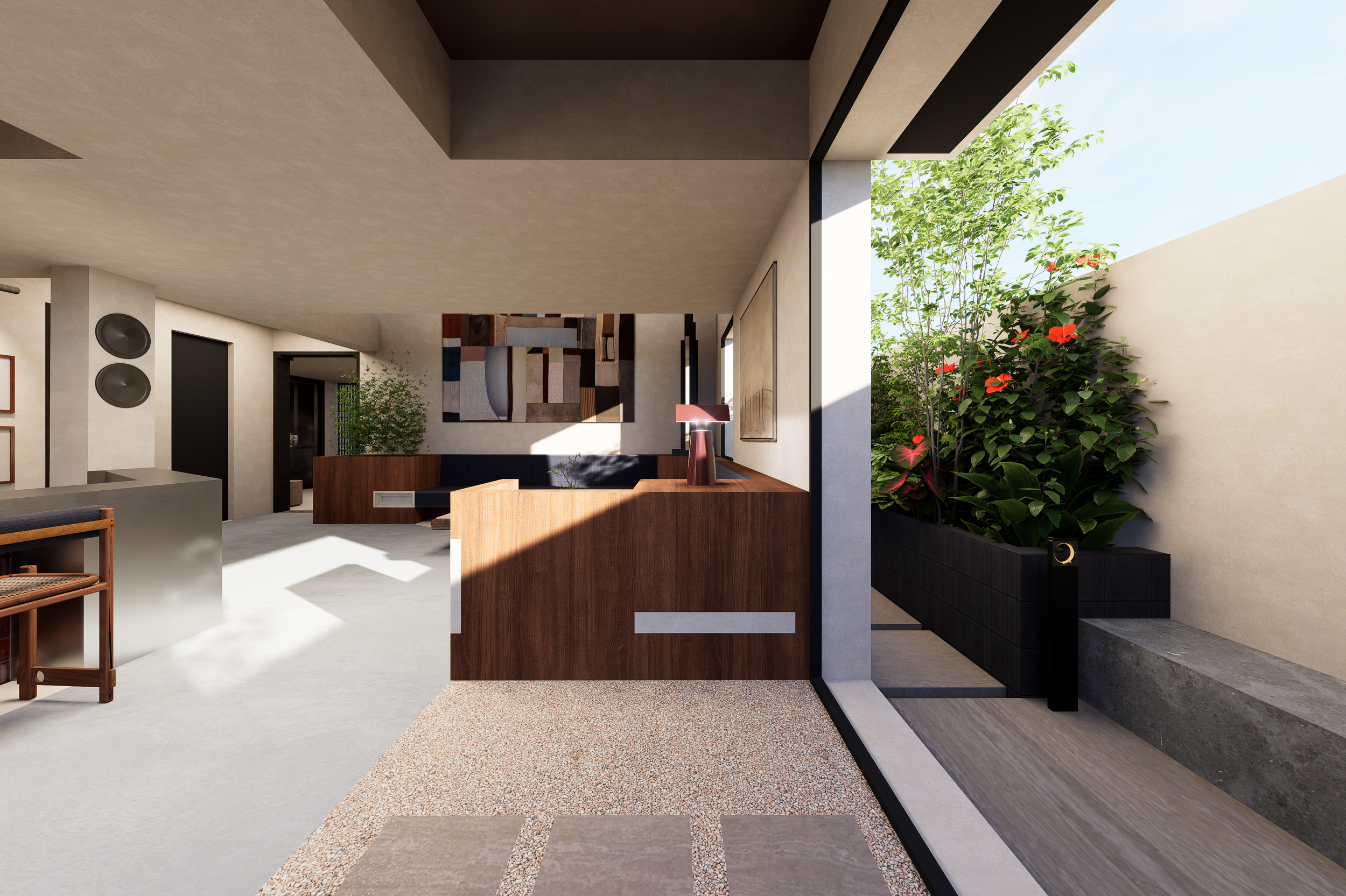
The ground floor acts as a composed threshold. Double-height volumes, deep-toned timber panelling, and filtered daylight create a space that feels cinematic yet intimate. Shadows from carved screens animate the walls, bringing movement to stillness. The palette draws from Kolkata’s warmth, with burnt sienna, forest green, muted indigo, and soft plaster tones forming a grounded base. The space balances weight and air, ornament and restraint. It establishes the tone of the home as reflective and deliberate.
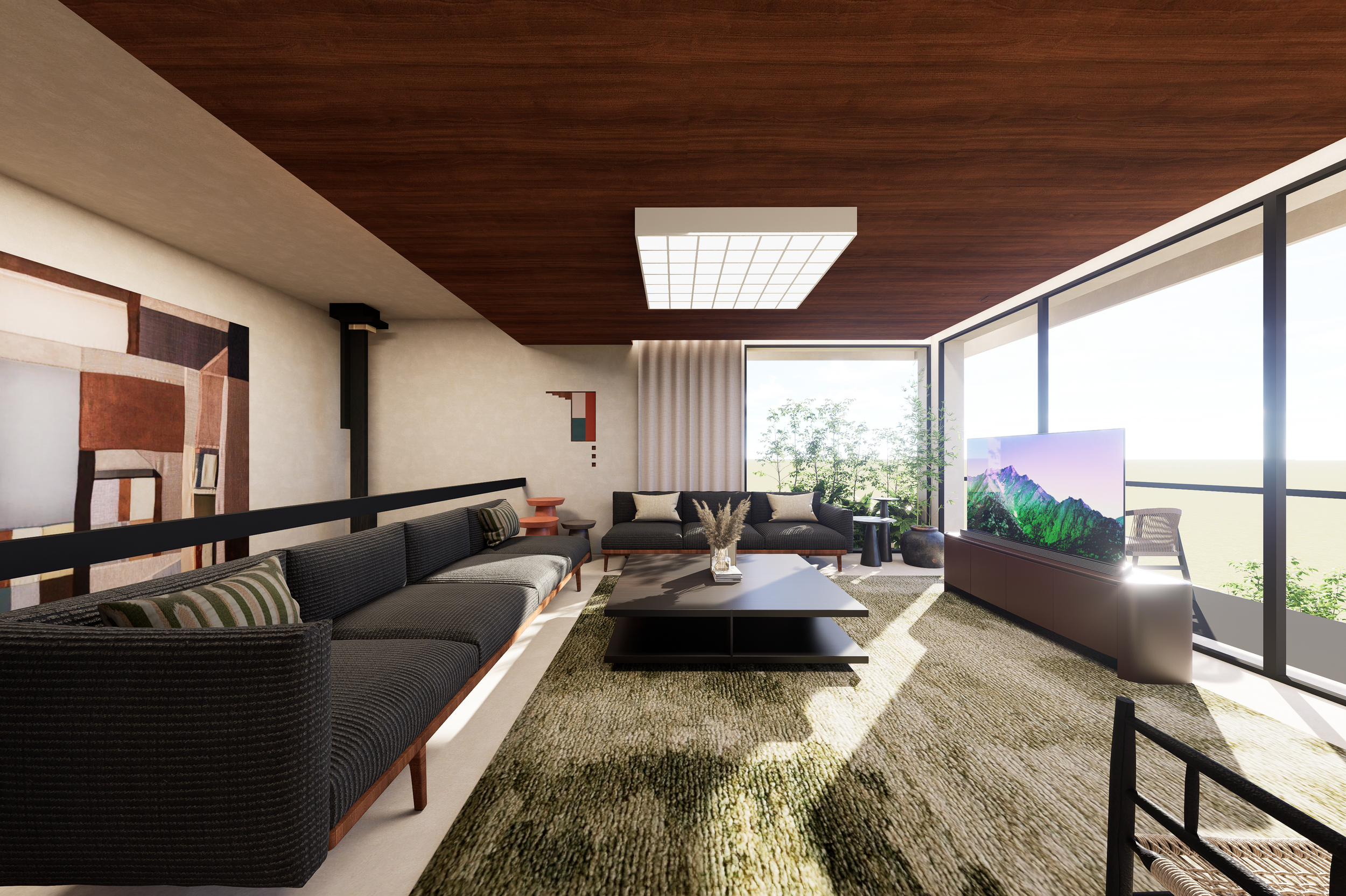
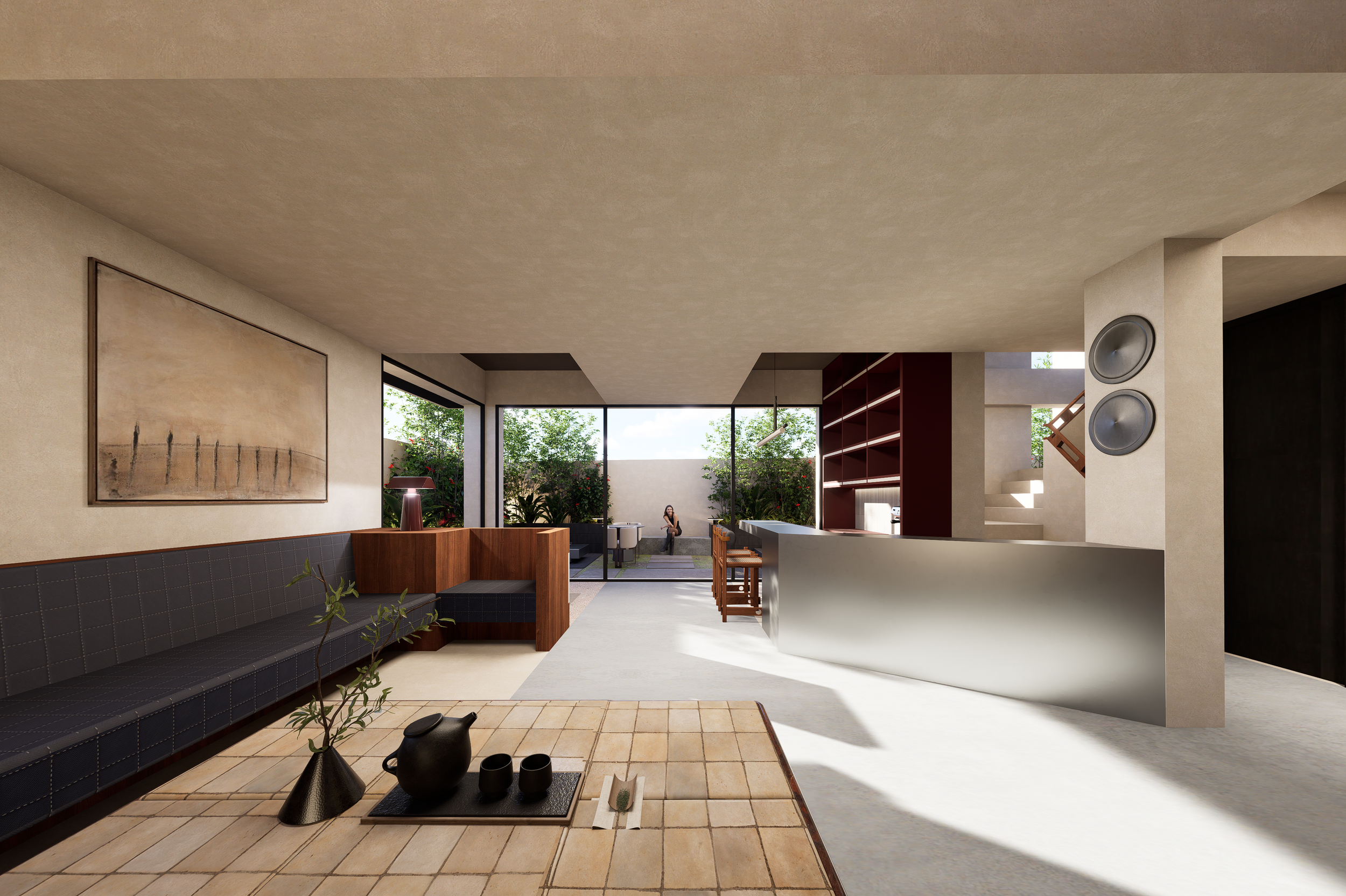
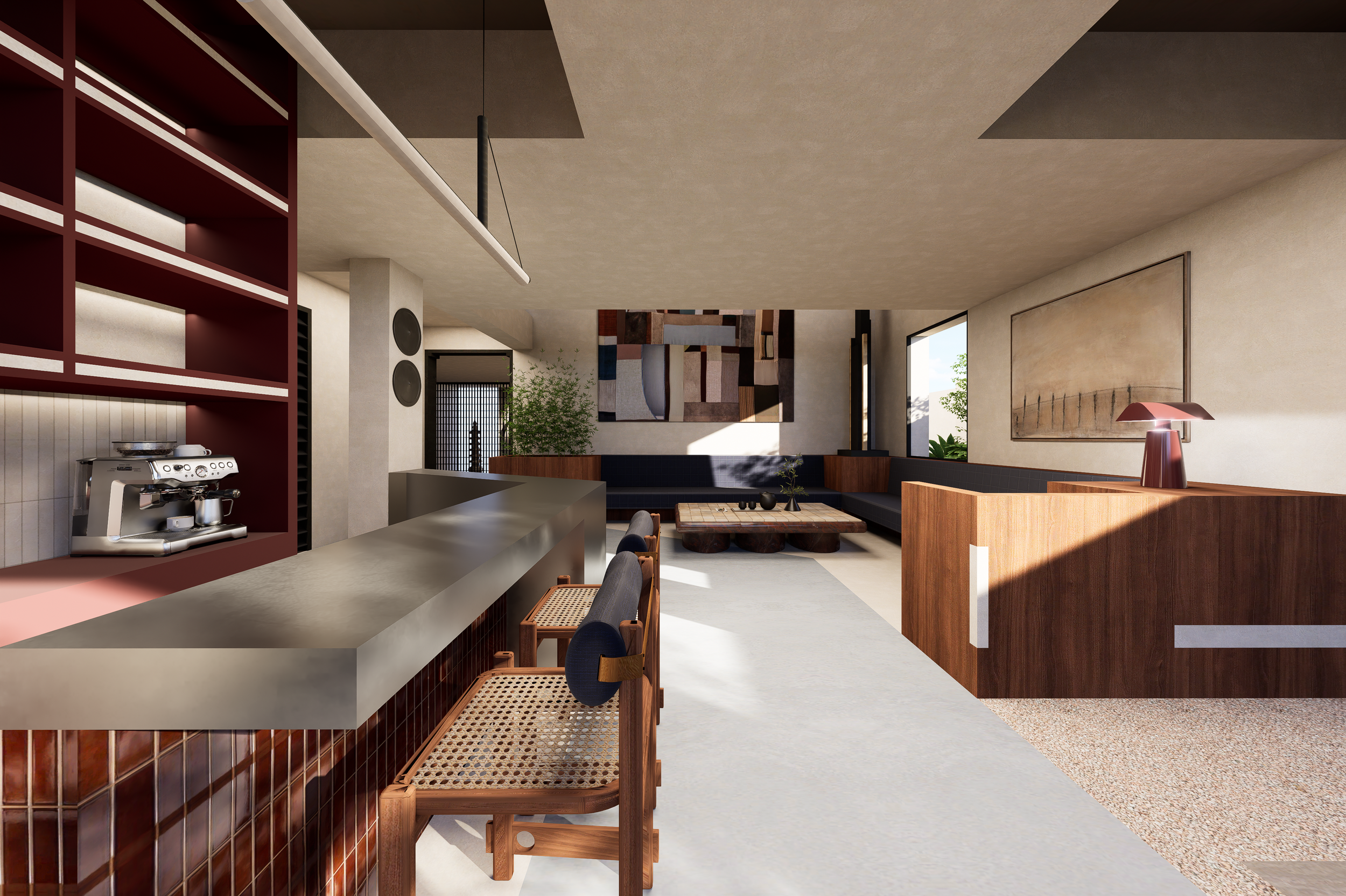
The first floor unfolds into the primary living and dining areas, where structure and warmth coexist. Art Deco symmetry frames transitions, while Victorian references appear in proportions rather than ornament. Mid-century furniture with walnut frames and woven cane introduces comfort and tactility. Repetition of materials creates visual clarity, ensuring cohesion across the floor. Here, the home feels social and composed, designed for gathering yet grounded in thoughtful detail.
reflection and retreat
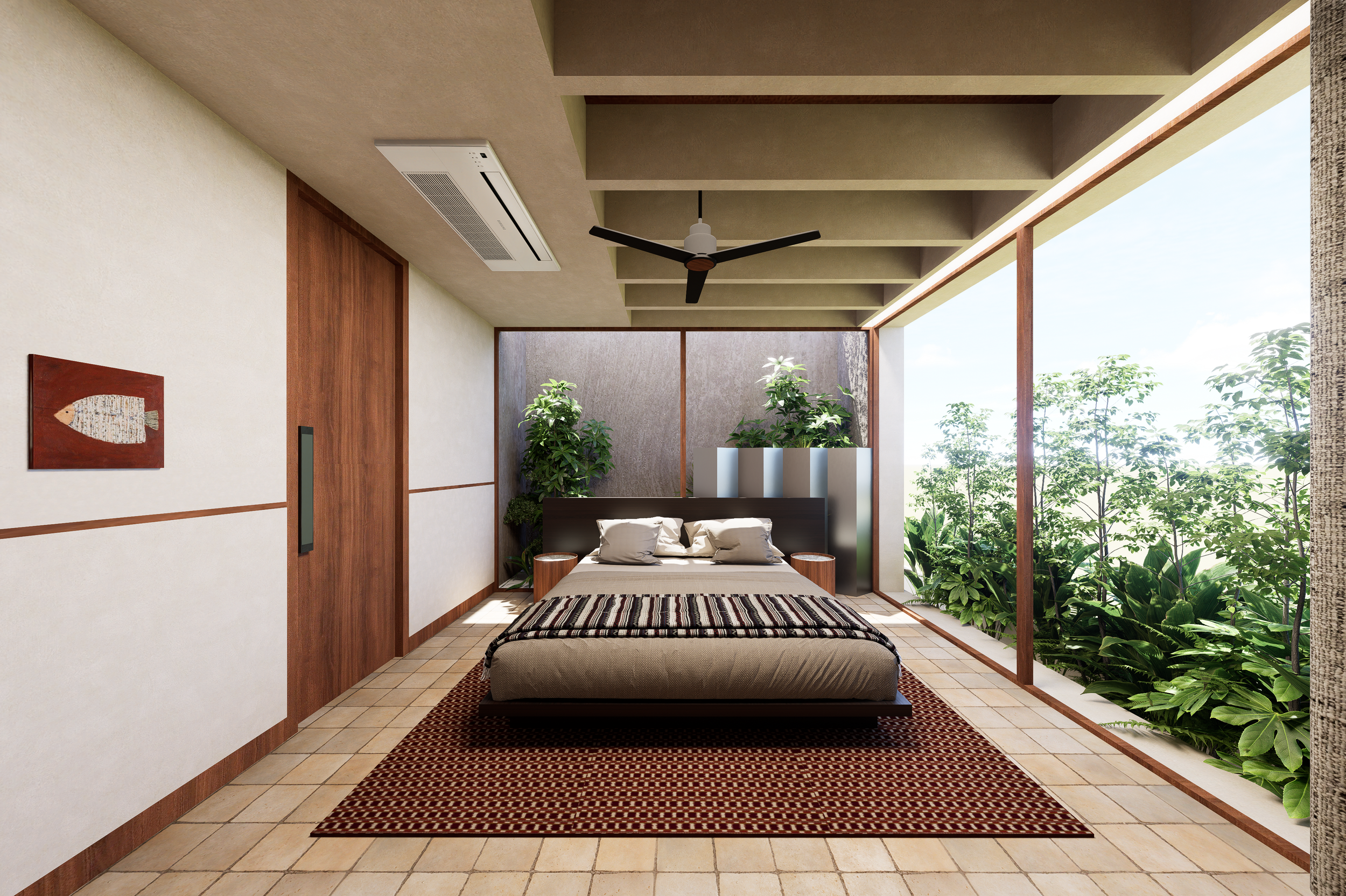
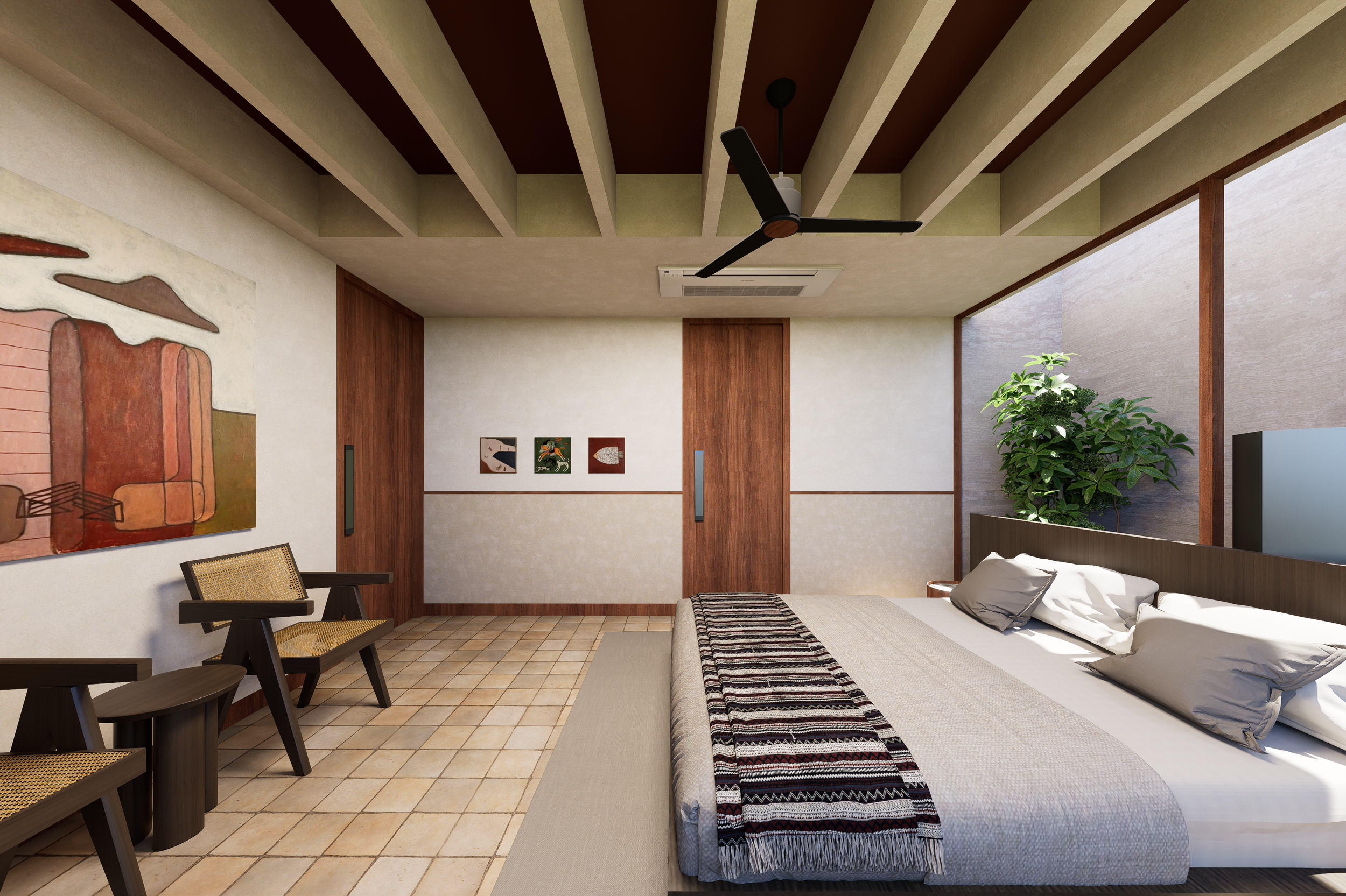
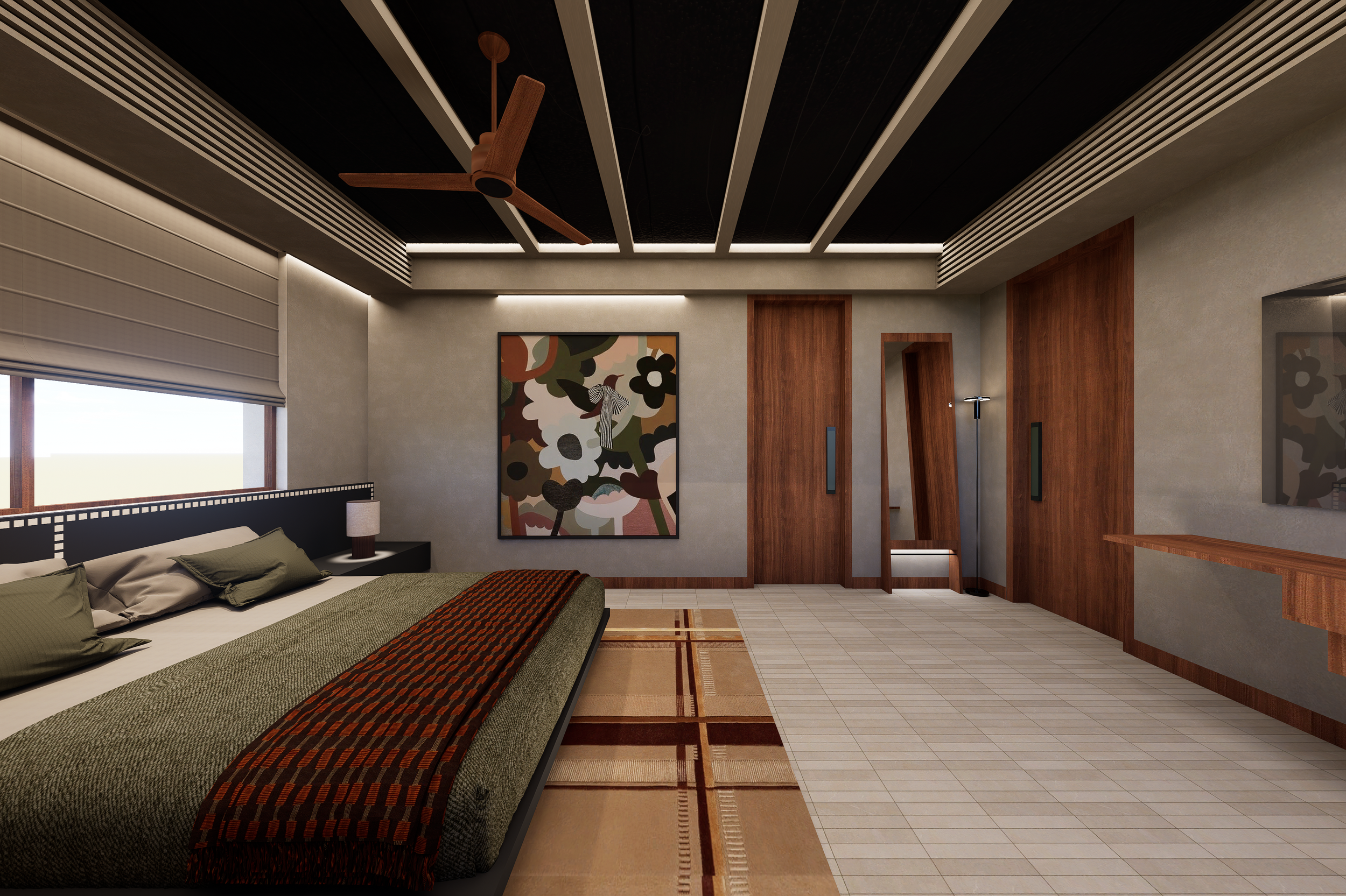
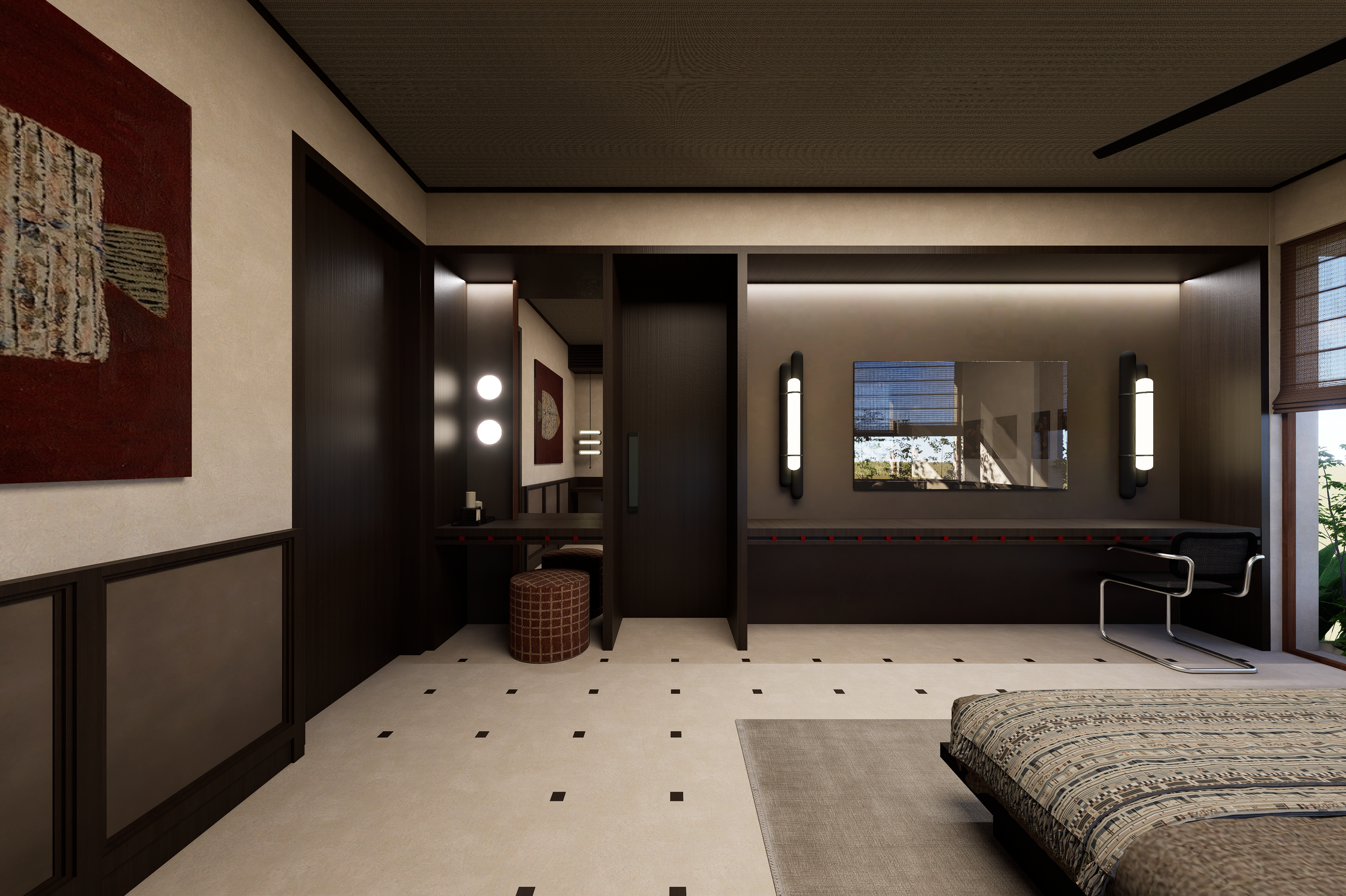
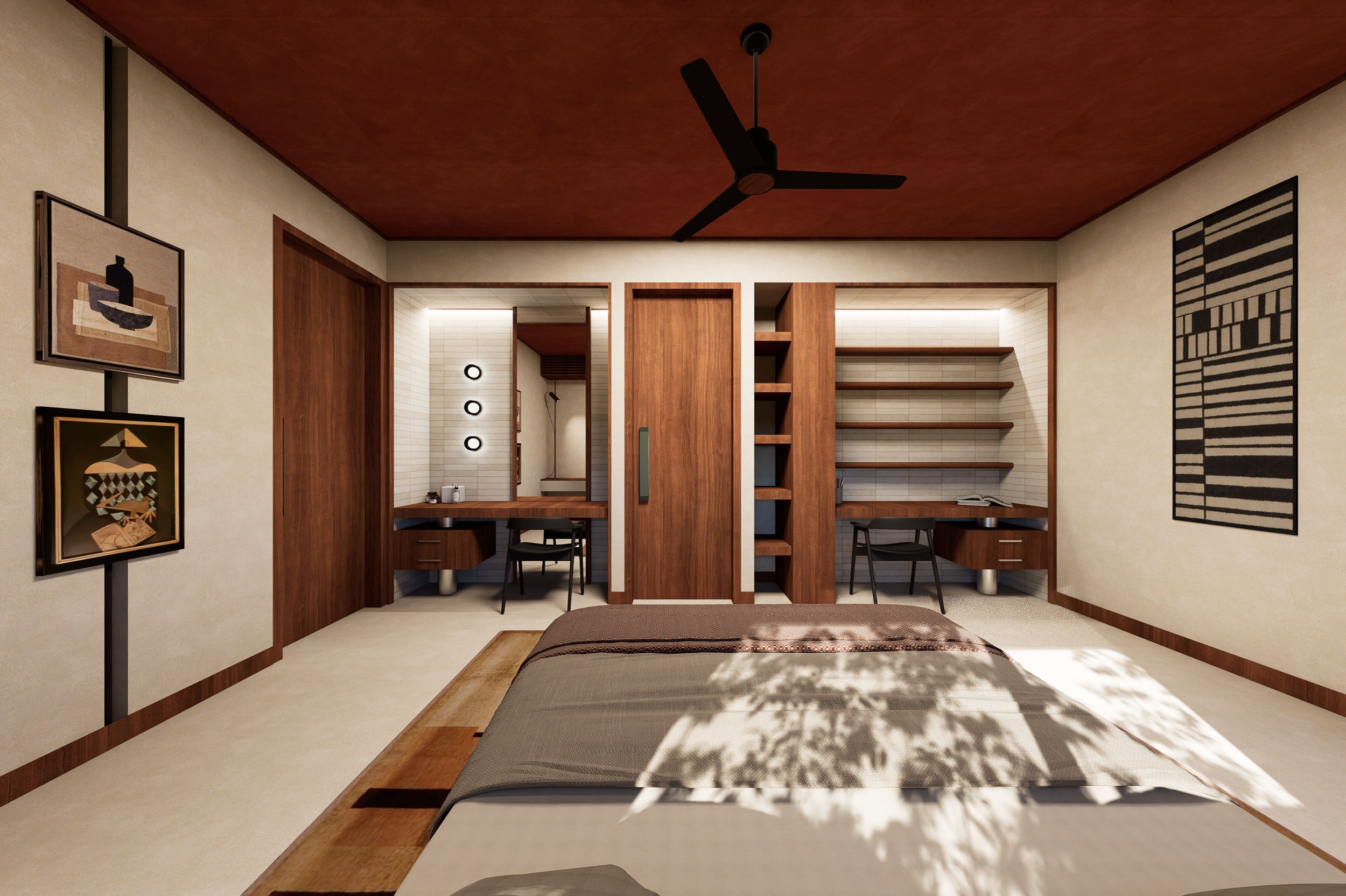
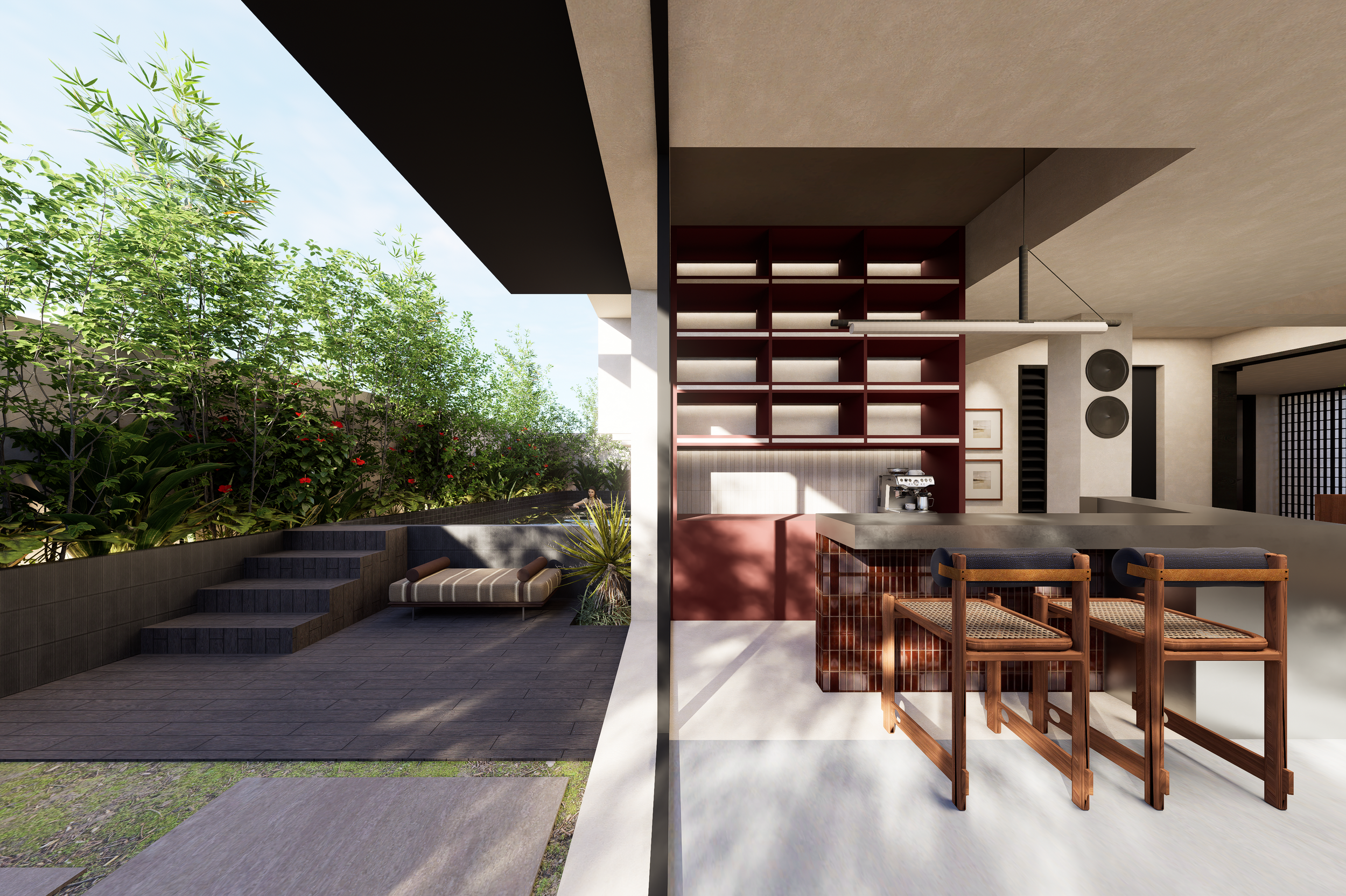
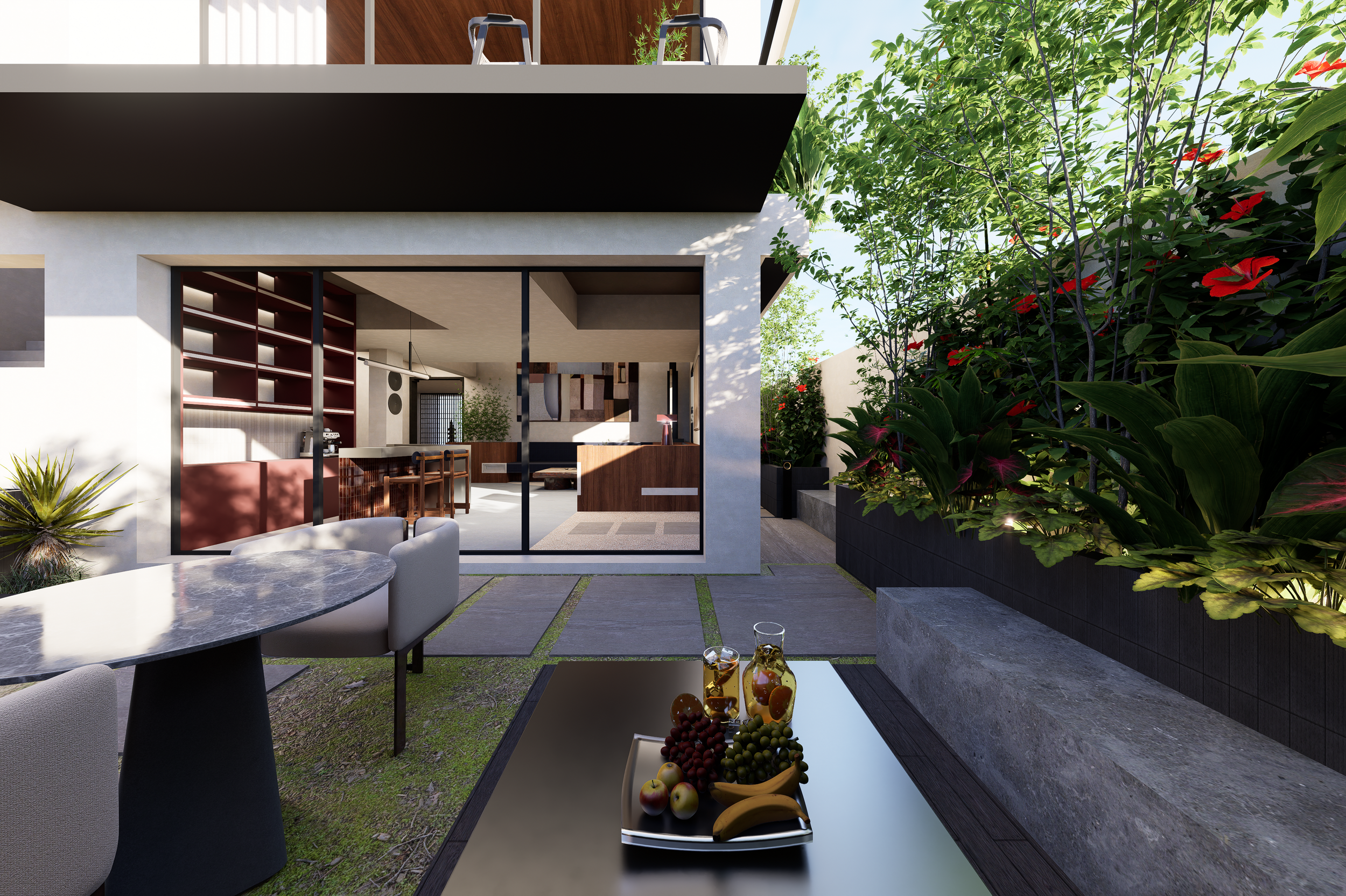
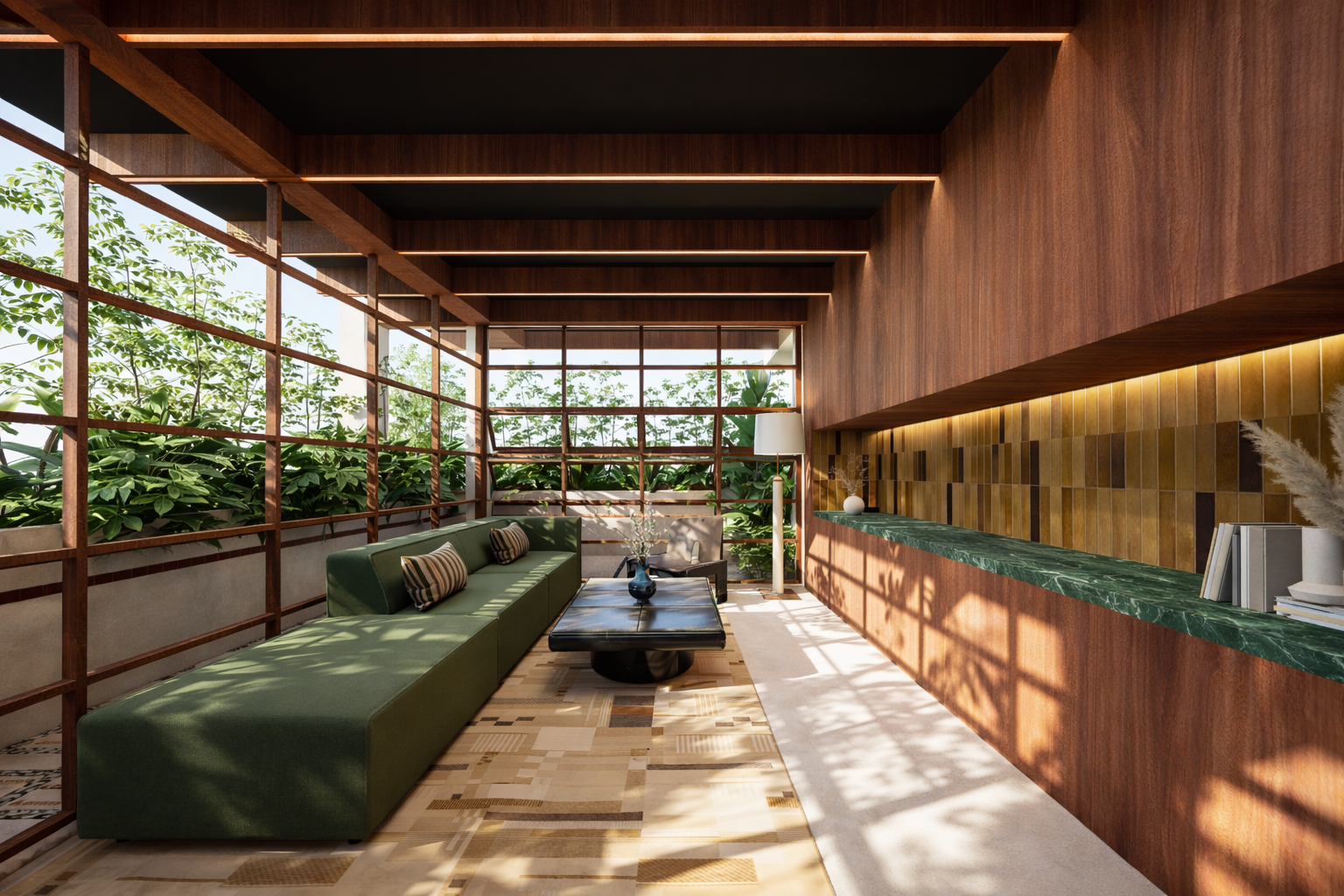
The second floor becomes quieter and more personal. Bedrooms are softened through layered textiles and earthy hues of olive, rust, parchment, and charcoal. Deco geometry appears subtly in headboards and ceiling compositions, while Victorian influence is expressed through door proportions and hardware. Large windows frame greenery as moving artwork, dissolving the boundary between interior and exterior. The mood is calm and introspective, allowing ornament to exist only where it enhances emotion.
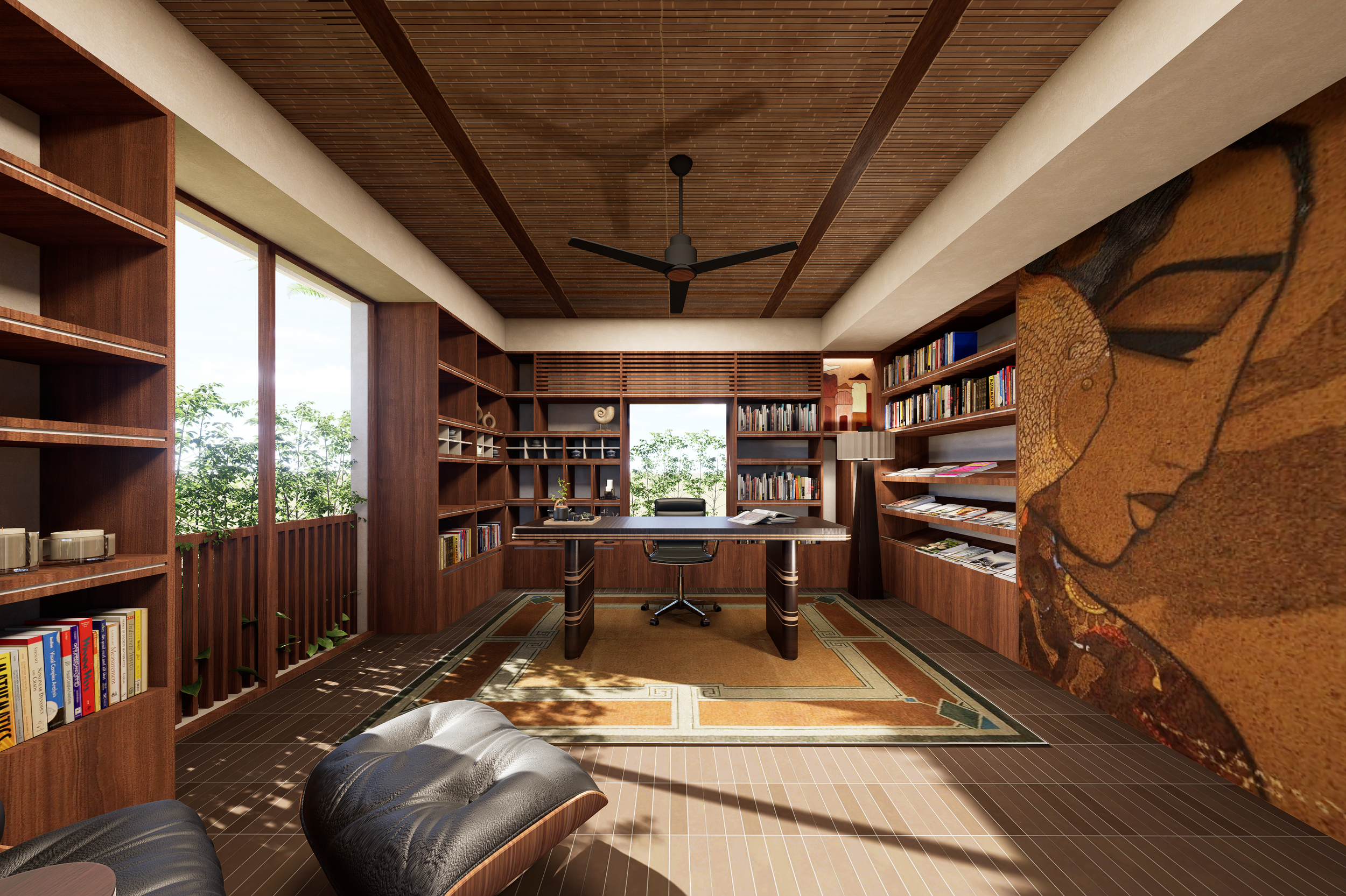
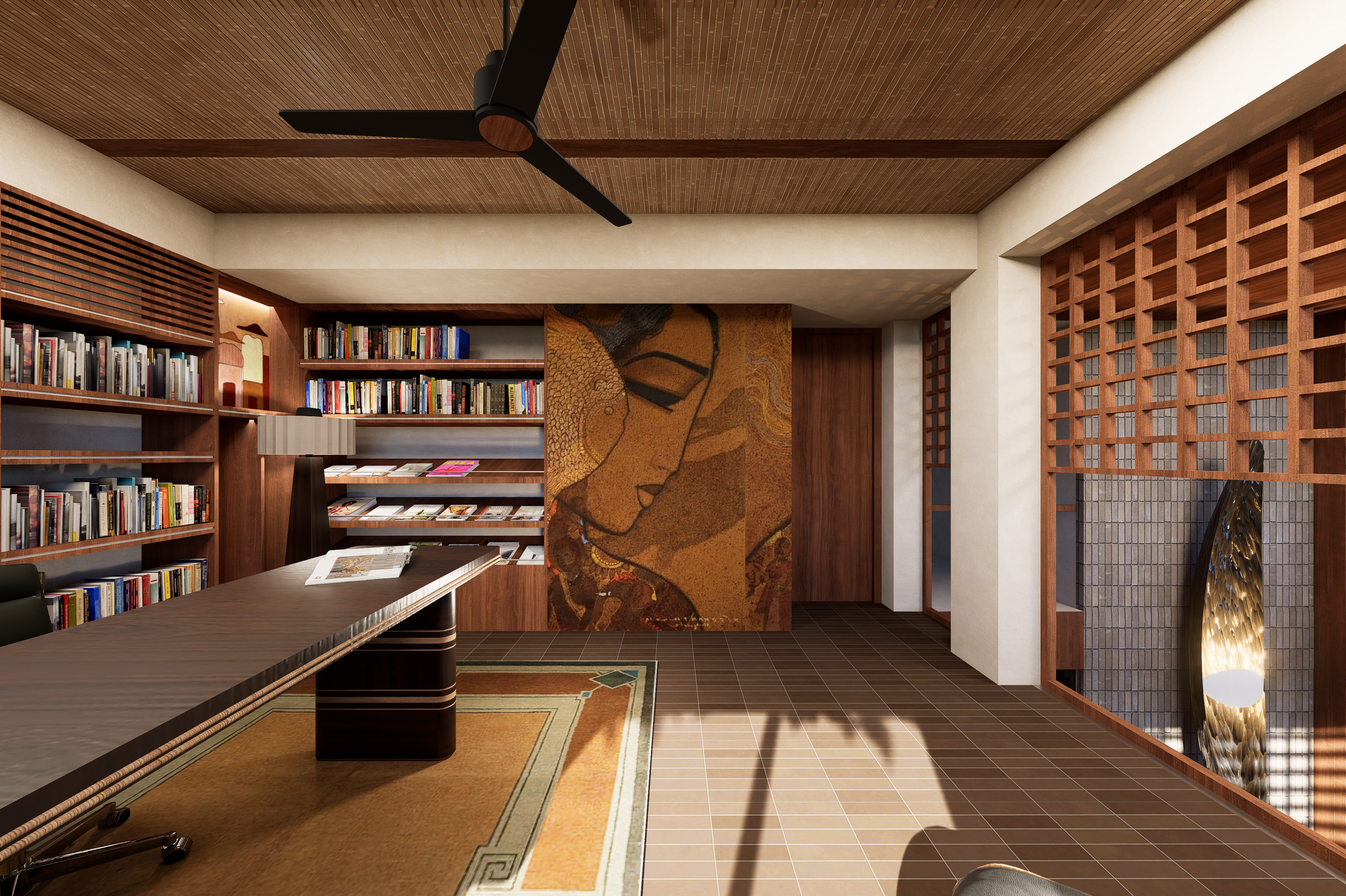
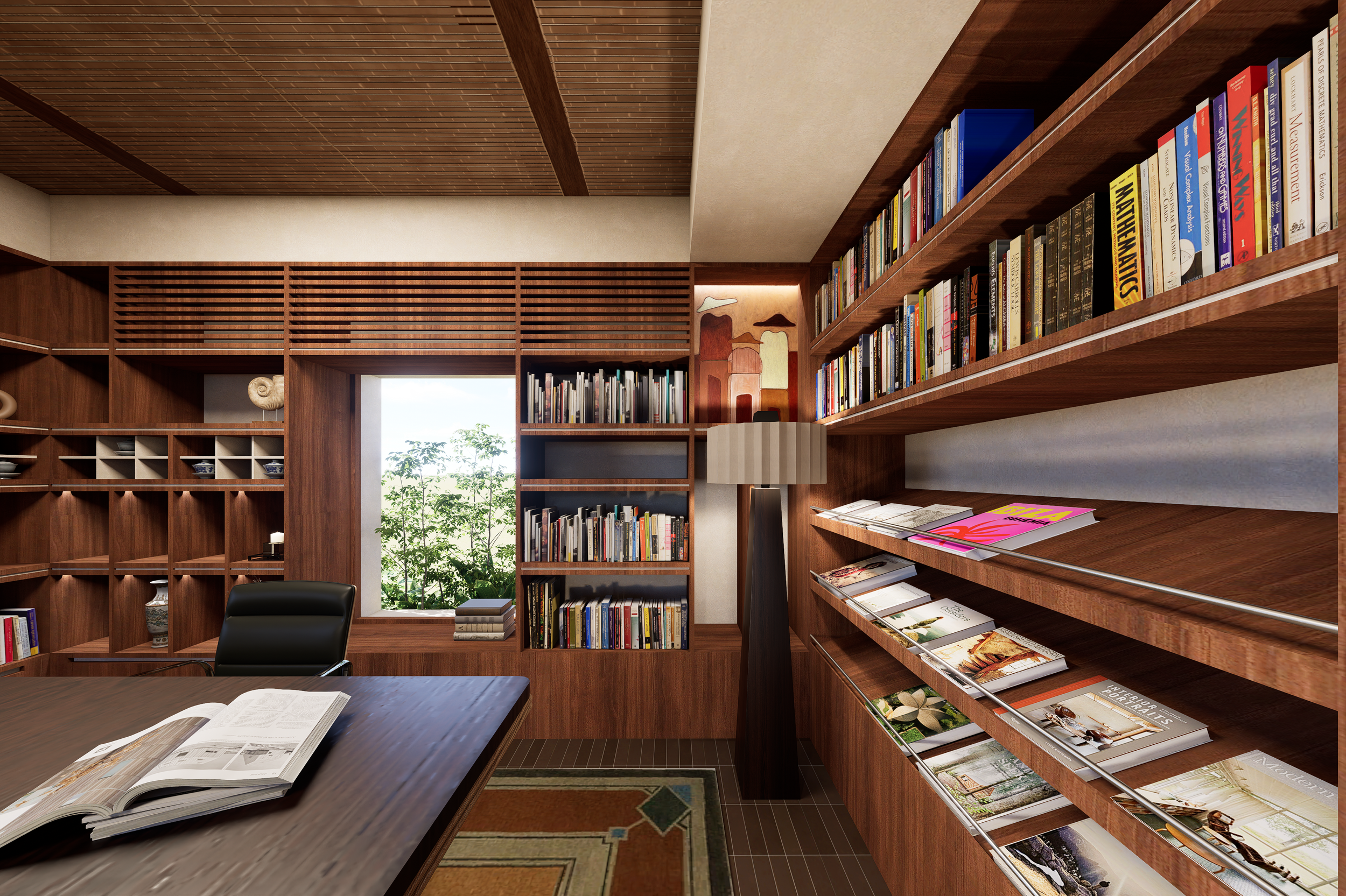
Higher levels become spaces of reflection and retreat. A study or gallery floor transforms the residence into a living archive, where art, books, and curated objects inhabit dark timber shelving and lime plastered walls. Brass sconces and sculptural lighting punctuate vertical planes, adding depth without excess. At the terrace level, ornament recedes further. The sky becomes the ceiling, and greens spill into stone surfaces. Minimalism dominates here, yet it never feels sterile. The proportions still carry Victorian grace, and Deco lines subtly inform railings and details. It is an exhale, a quiet resolution to the vertical journey.
This five-storey home is ultimately a house of temperament rather than trend. It is layered but edited, ornate yet disciplined. It embraces global design languages while remaining deeply Indian in spirit. Minimalism dignifies maximalism, and maximalism remains mindful. Every threshold feels intentional, every silence full. The residence stands as a soulful, slow-burning symphony of design where the past is not preserved as nostalgia but reinterpreted with clarity and care. It is a living archive of reverence and richness, distilled into a contemporary form that belongs wholly to Kolkata and yet speaks a universal language.