
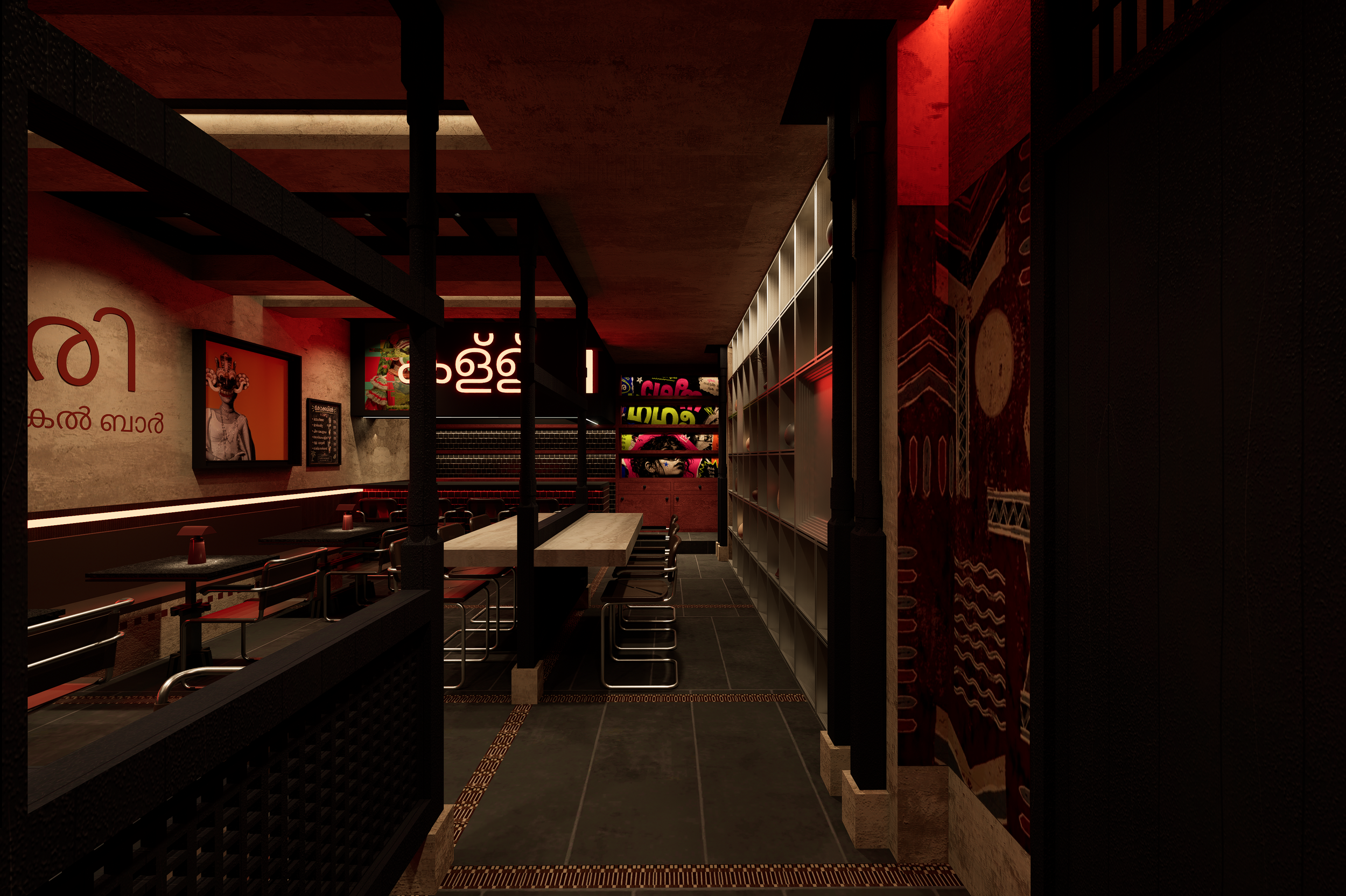
SERI
The project looks toward the Kerala toddy shop not as an aesthetic to be reproduced, but as a social condition to be understood. Traditionally informal, communal and unpretentious, the toddy shop is shaped as much by conversation, food and occupation as by architecture. Seri extracts this spirit without turning Kerala into a themed interior or a nostalgic reconstruction. The intention is to create a space that feels culturally familiar, yet unmistakably contemporary.
-
1100 SQFT
-
Hospitality, Restaurant, Bar, Public
-
Hauz Khas, New Delhi
culturally familiar, yet unmistakably contemporary
Set within approximately 1,100 square feet in Hauz Khas, New Delhi, the restaurant becomes a meeting point between two geographies and two tempos.
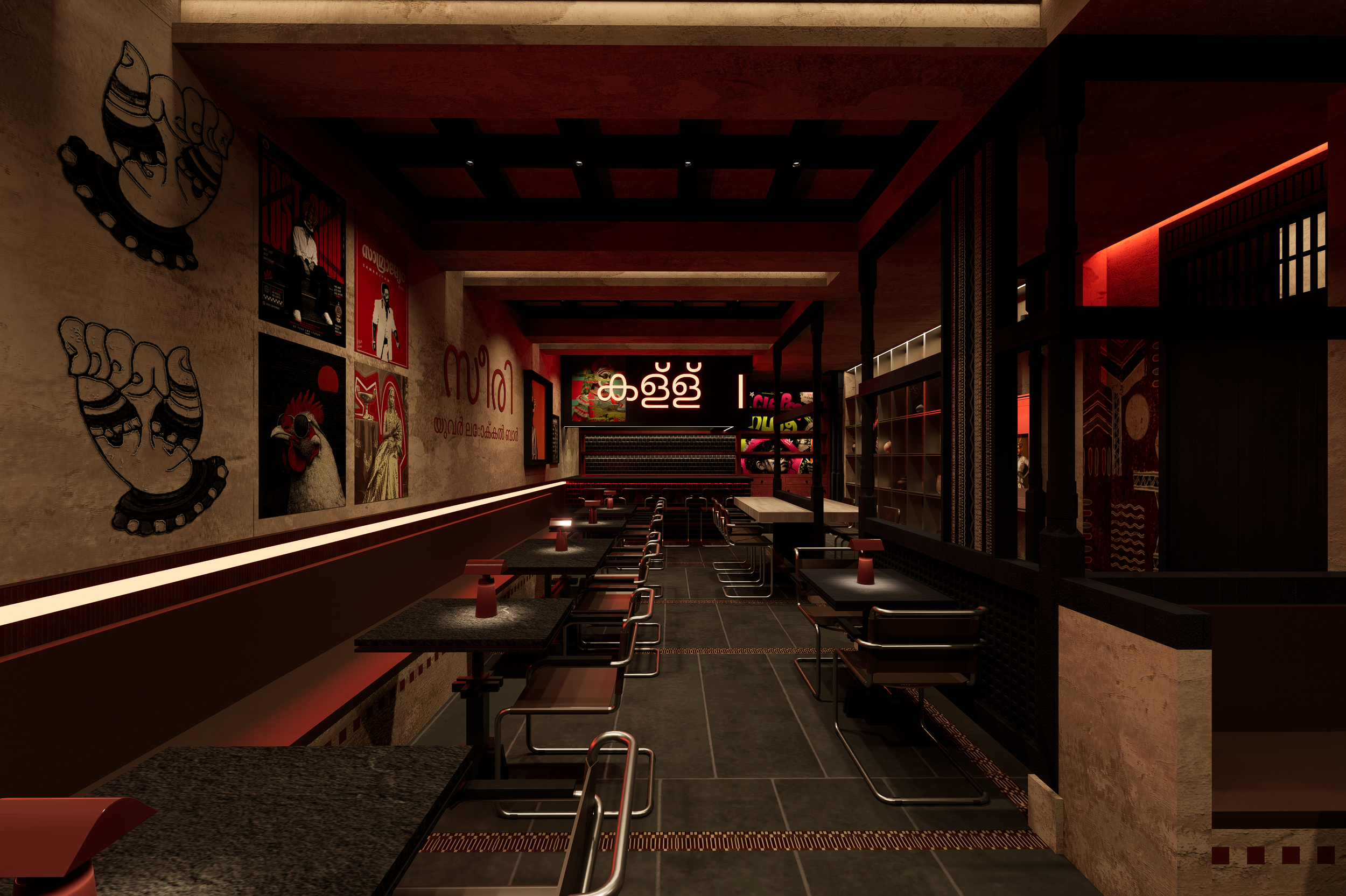
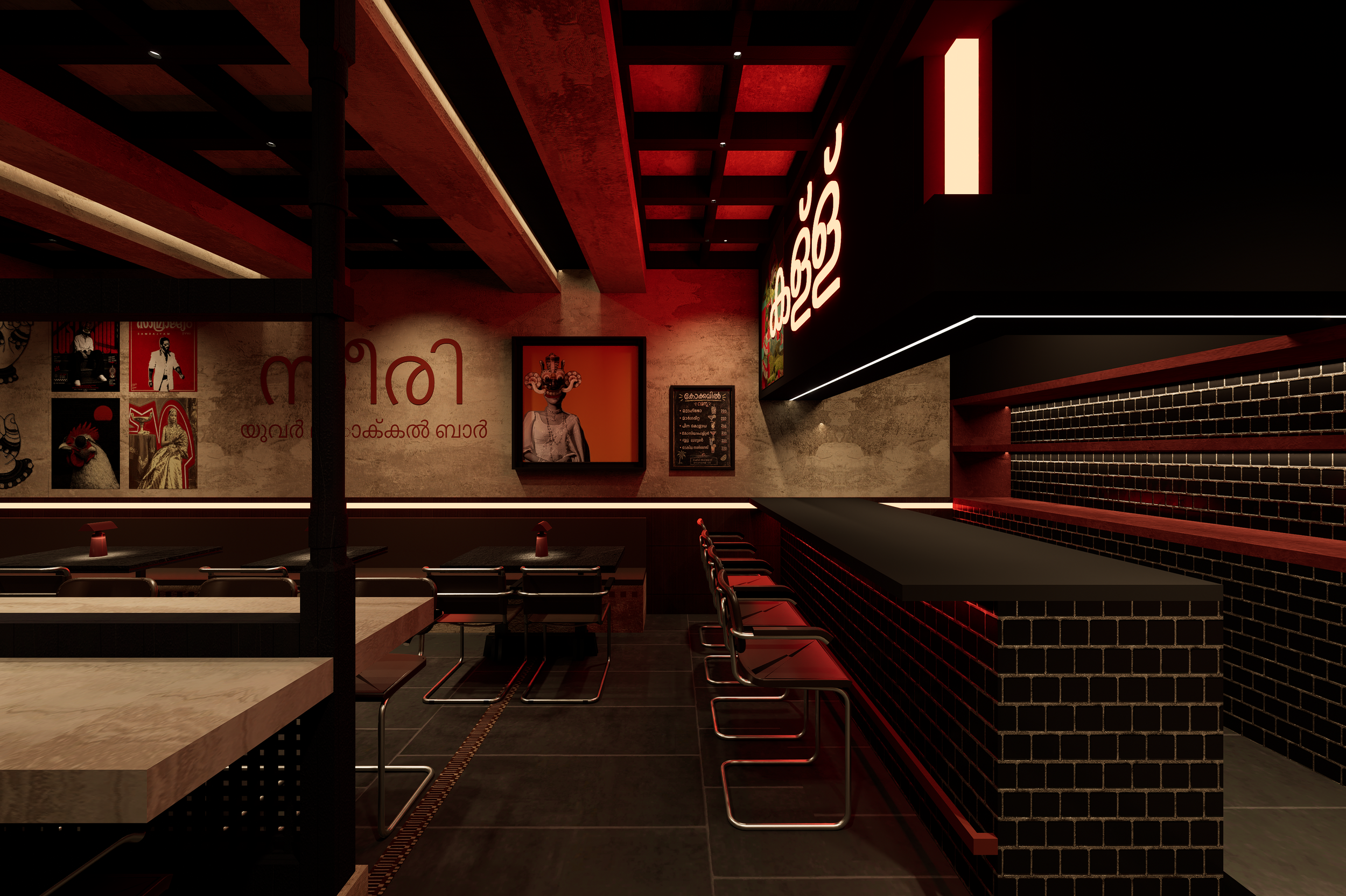
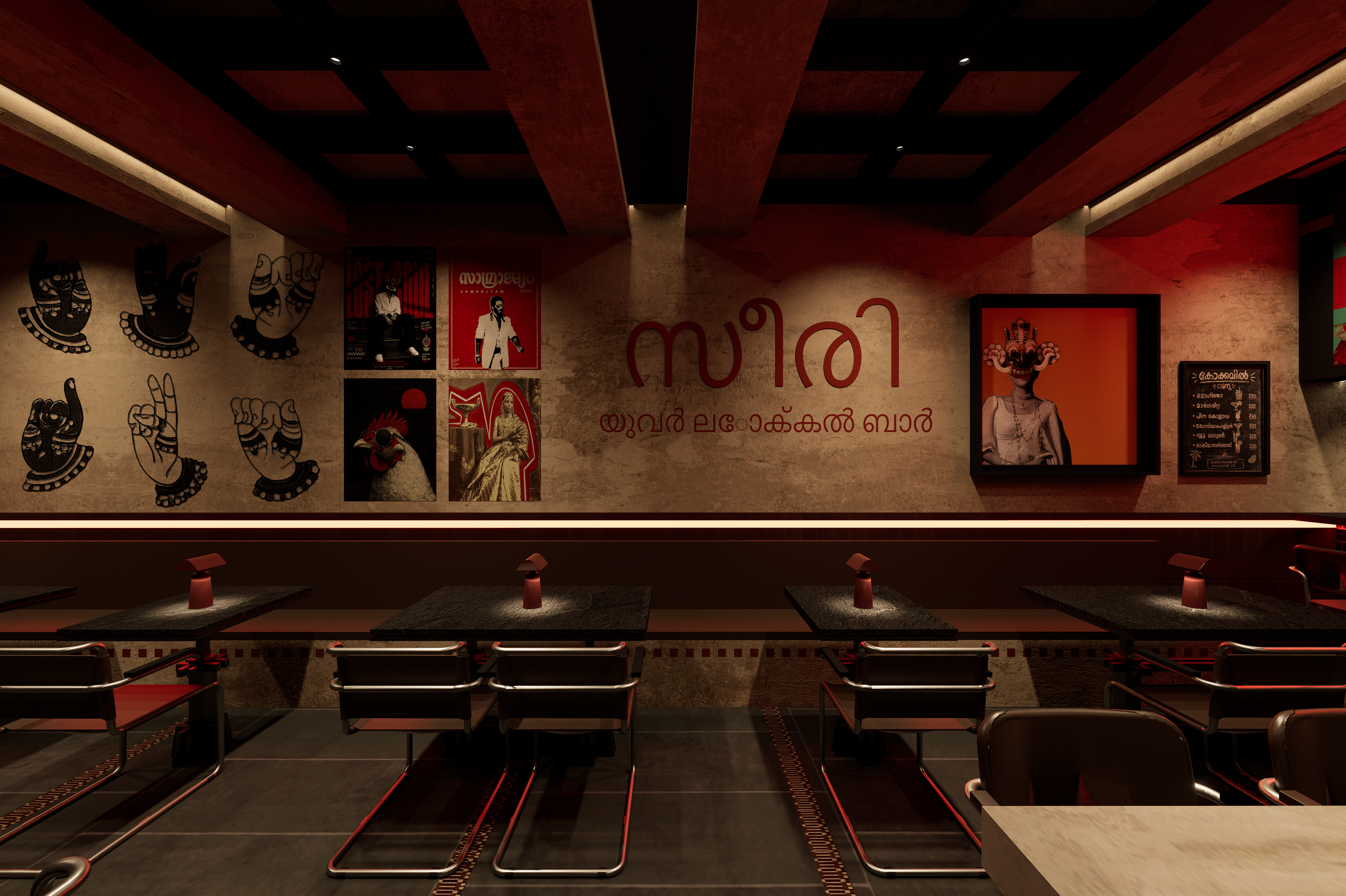
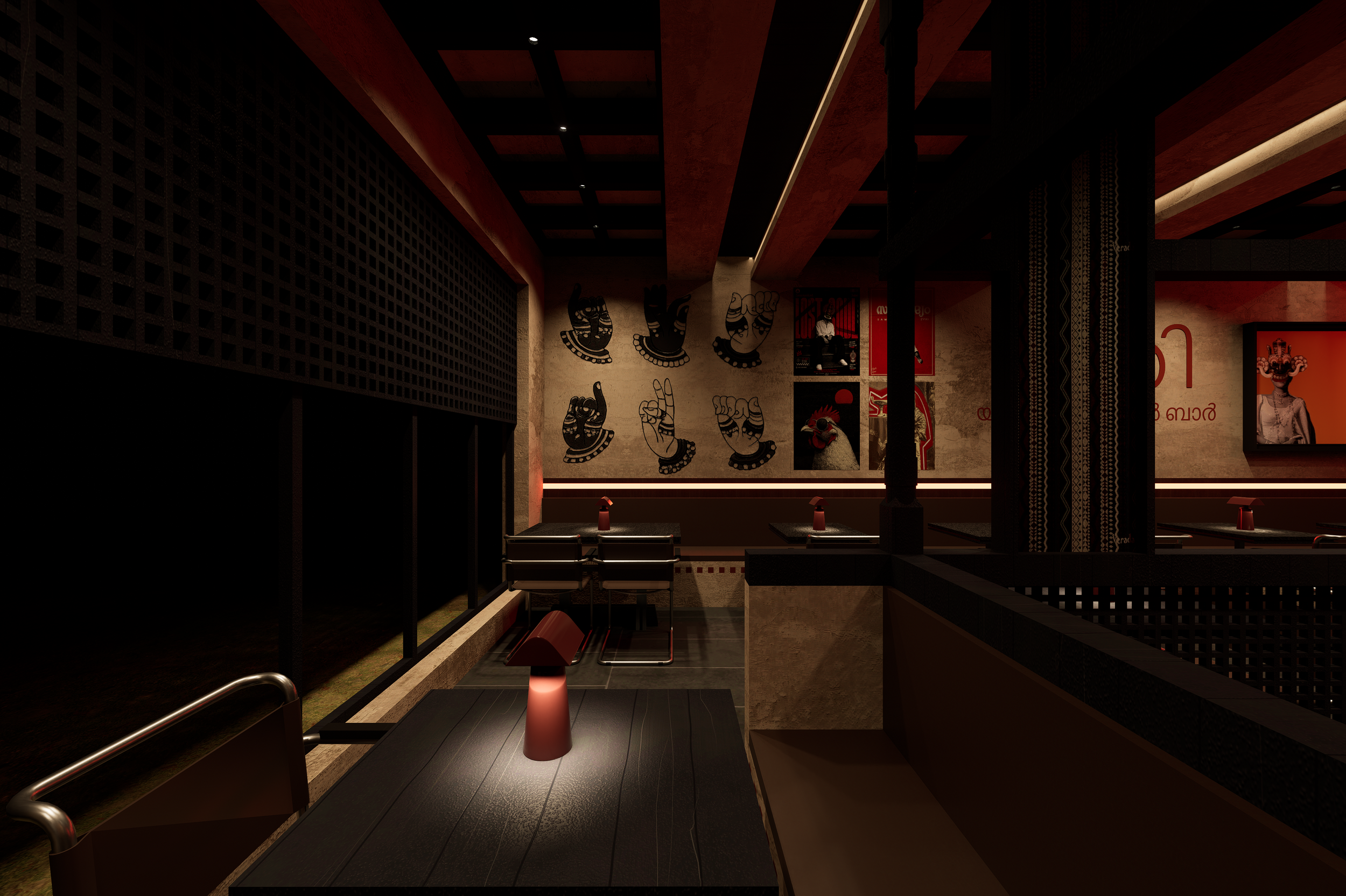
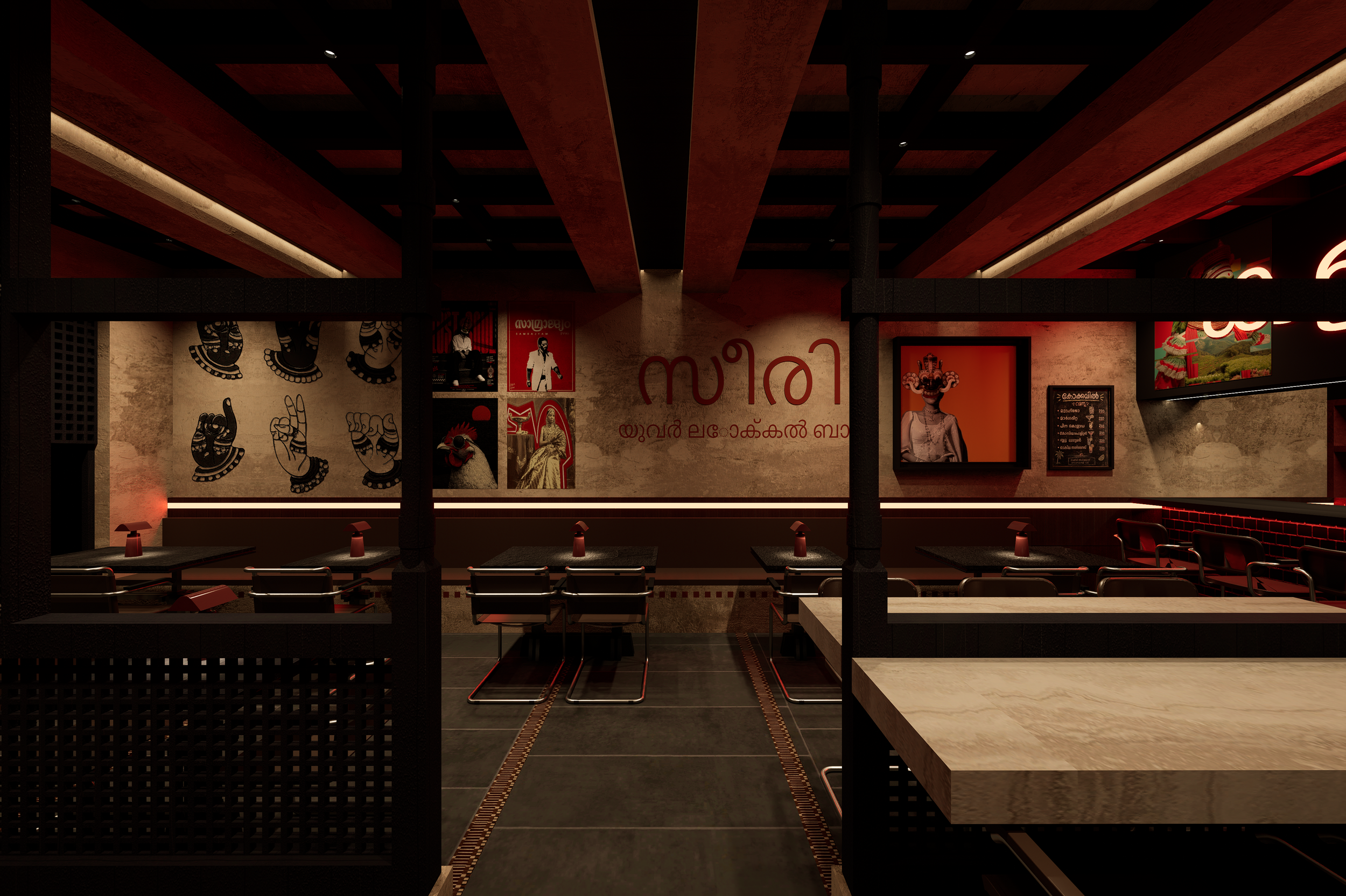
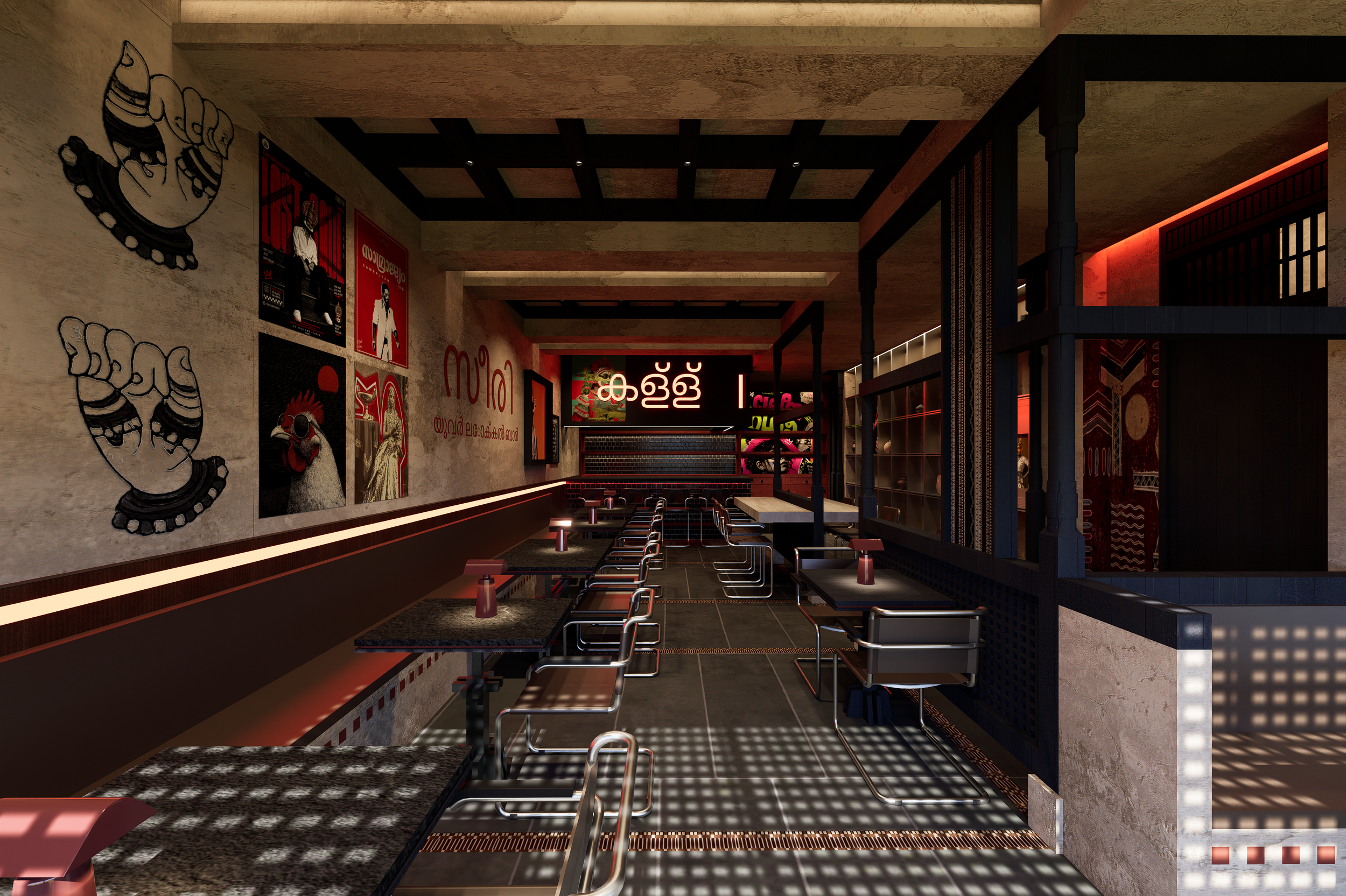
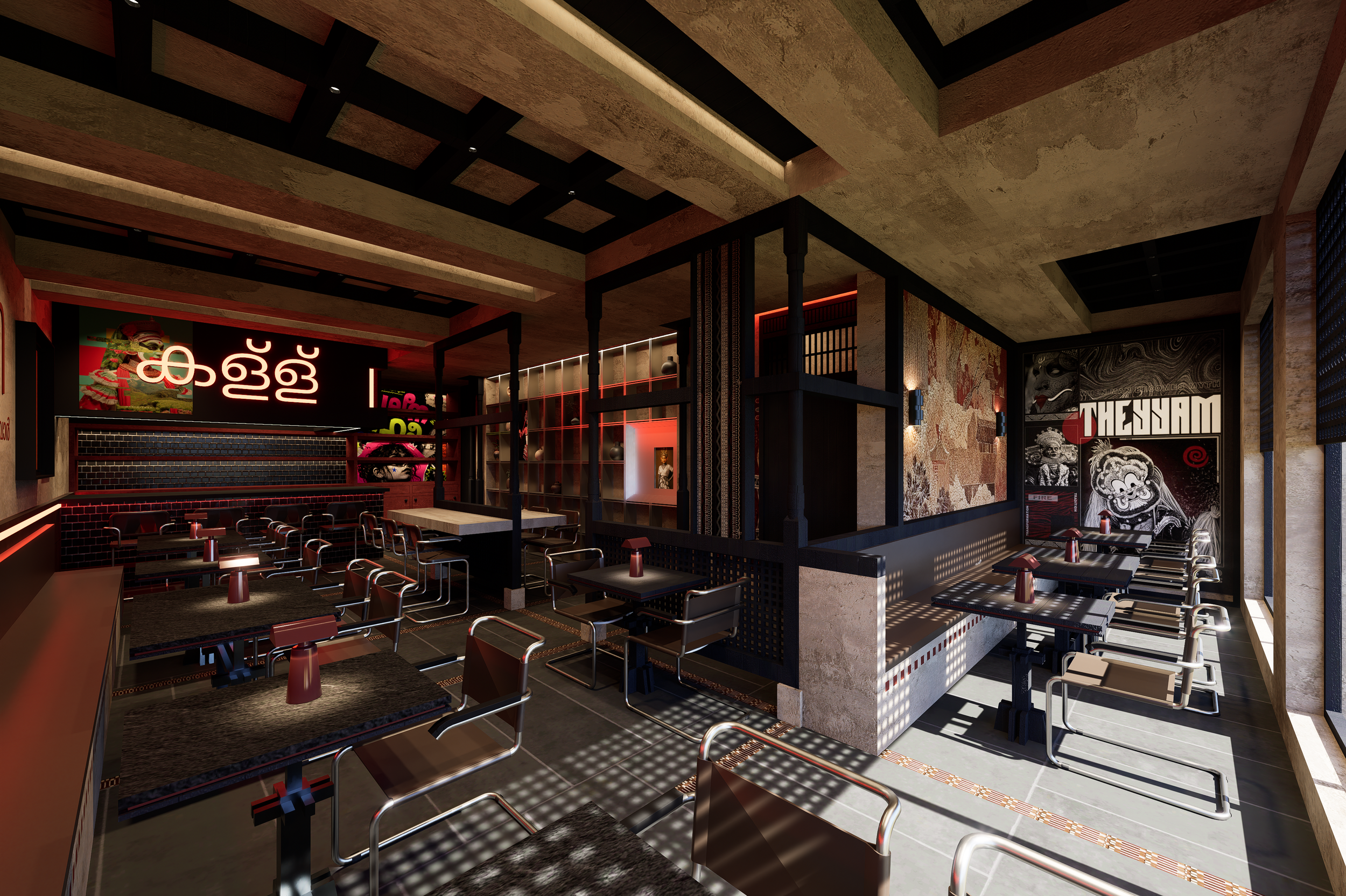
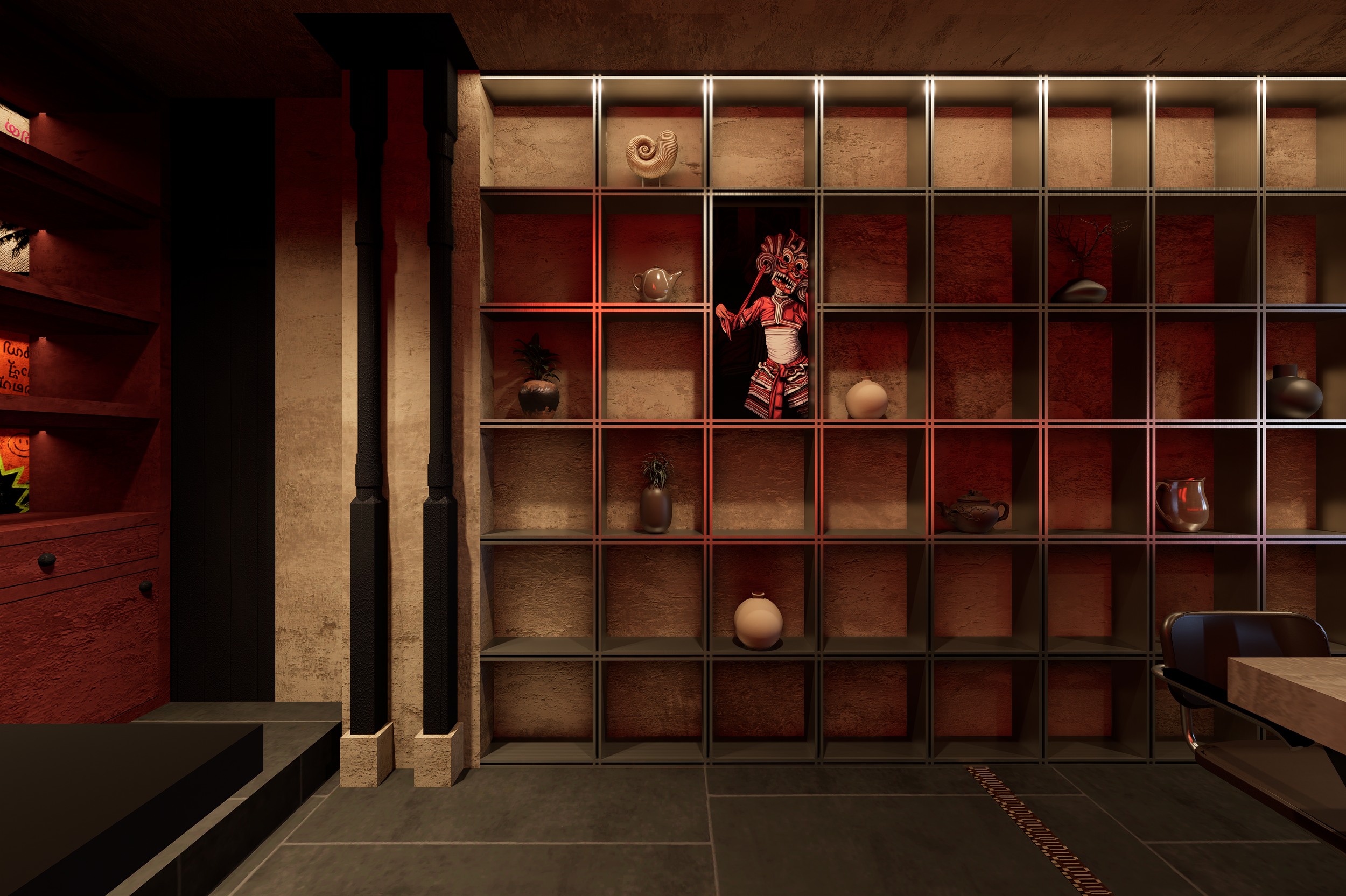
Kerala enters the space through fragments rather than literal references. Malayalam typography, folk imagery, portraits, vessels, craft objects and graphic interventions appear throughout the interior as moments of recognition. They are not arranged as exhibits but layered into the architecture as if accumulated over time. The cultural references remain playful, sometimes theatrical, but always grounded in the everyday visual language of Malayali life.
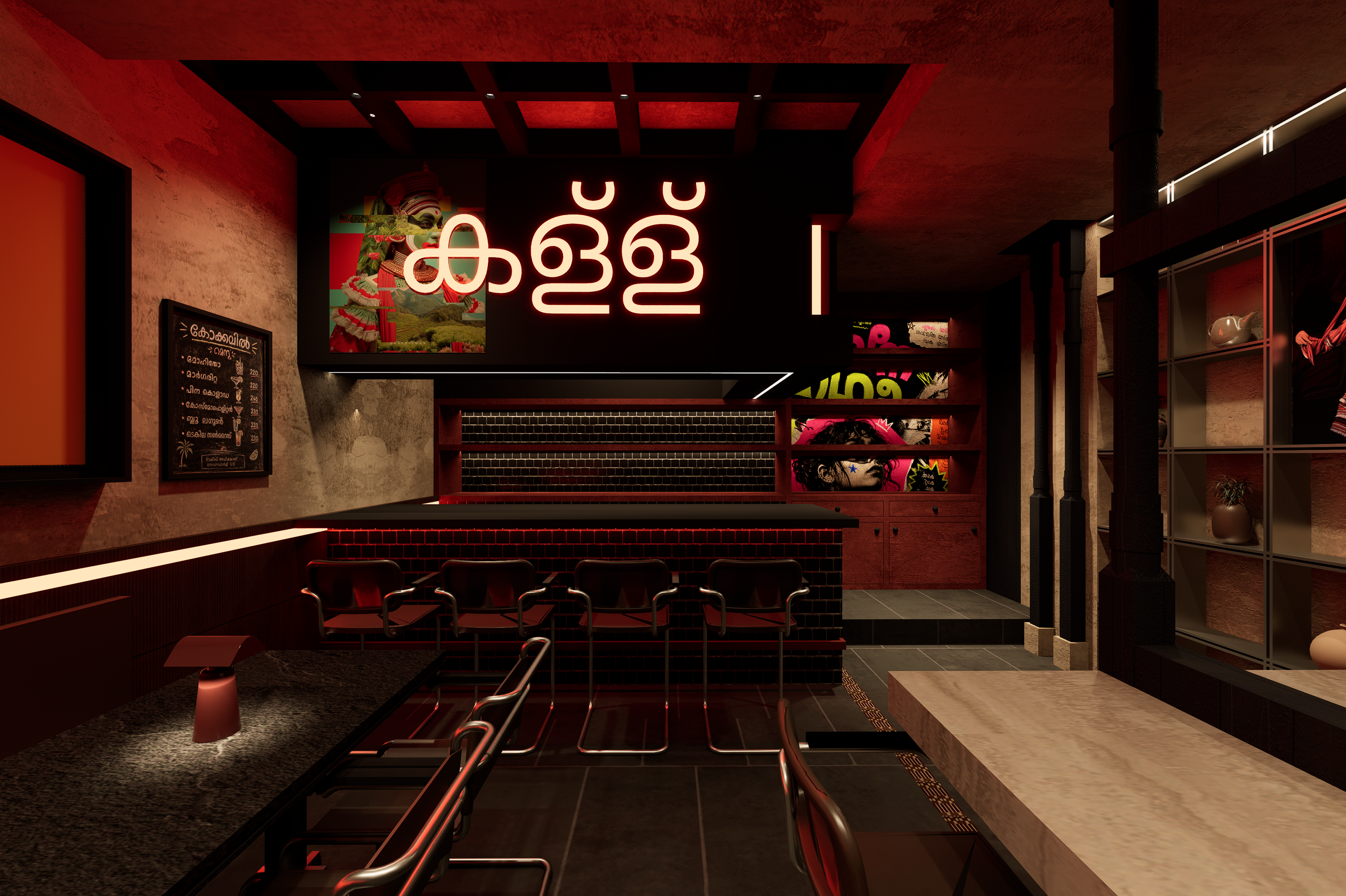
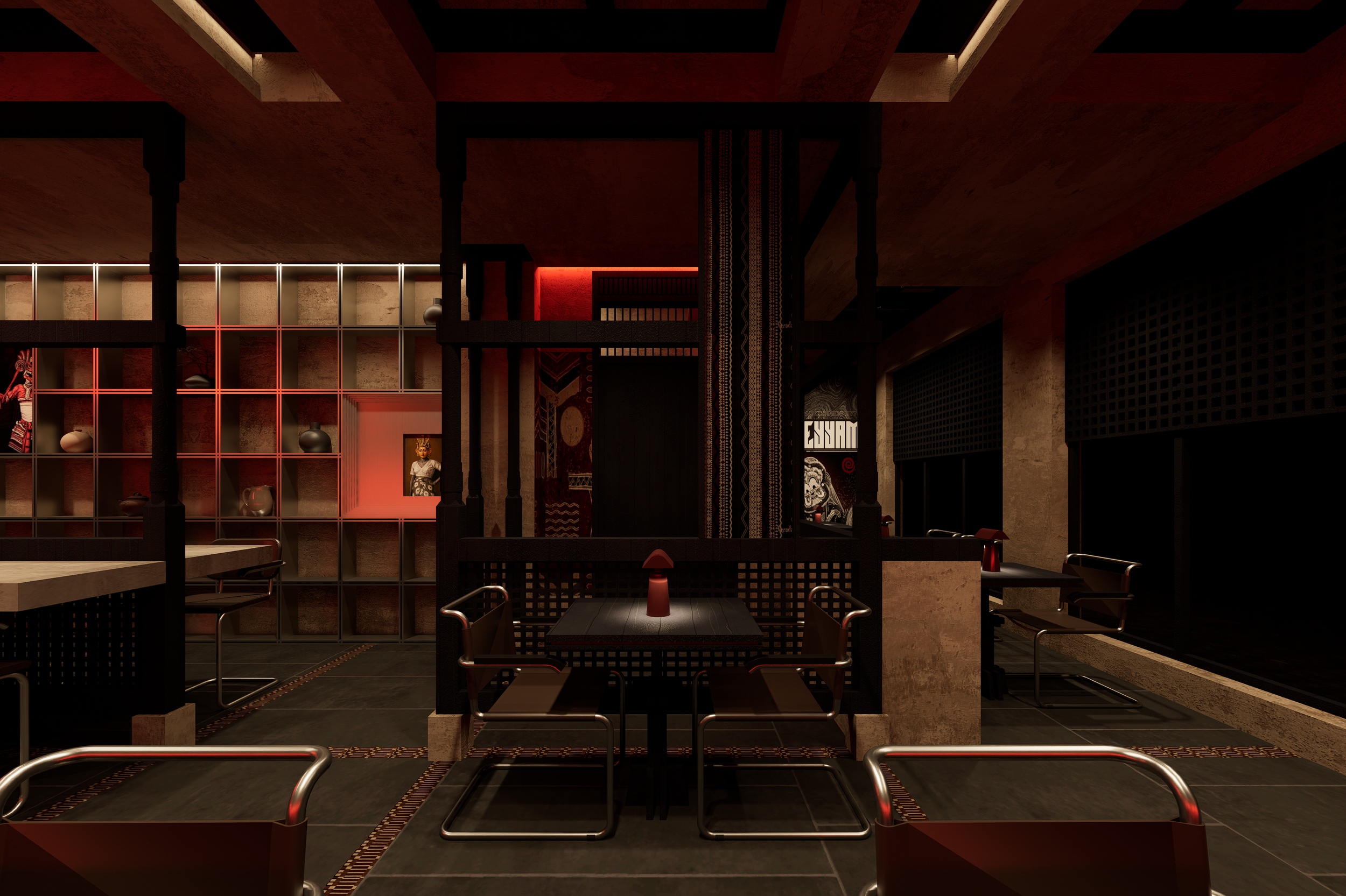
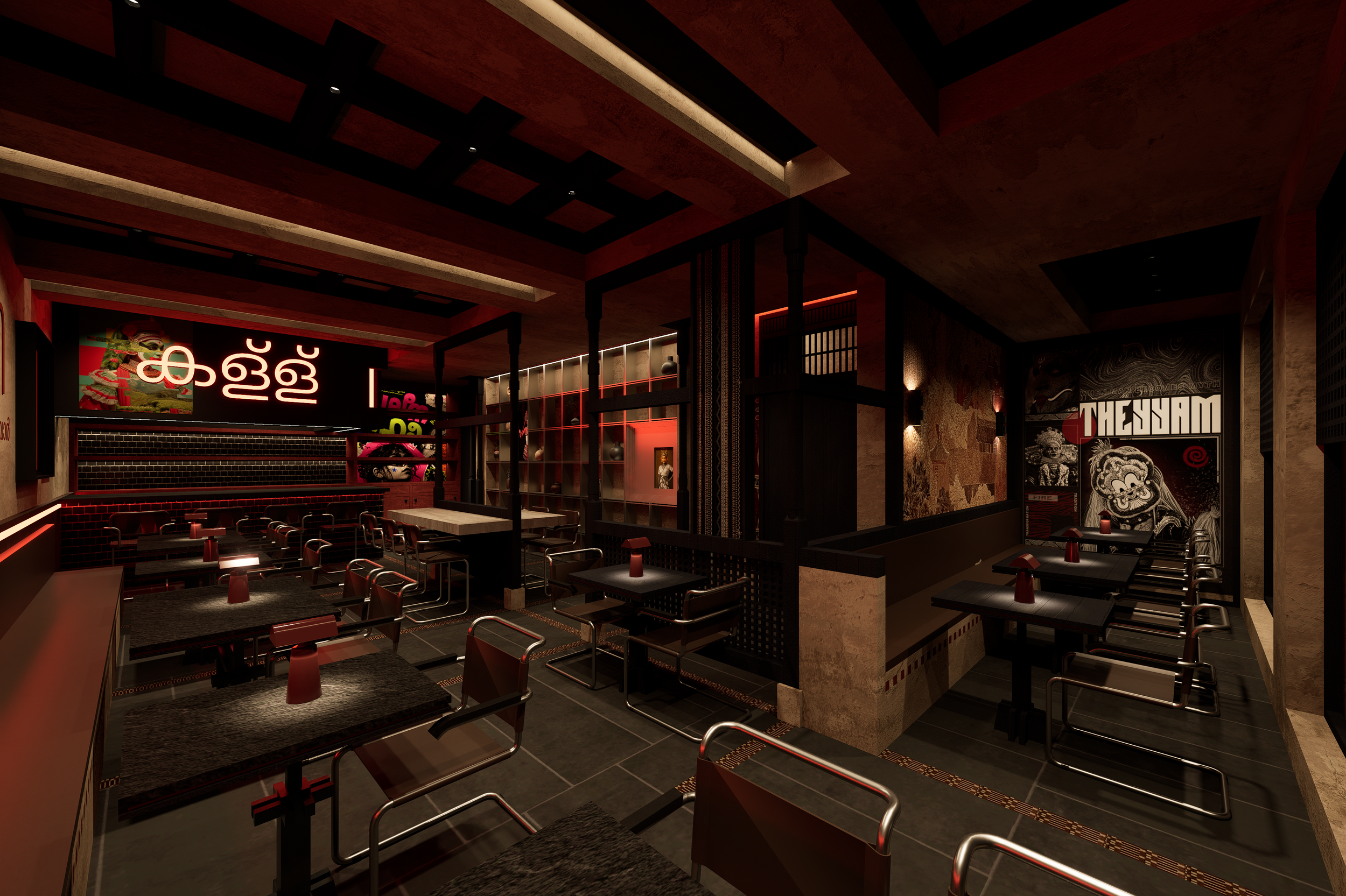
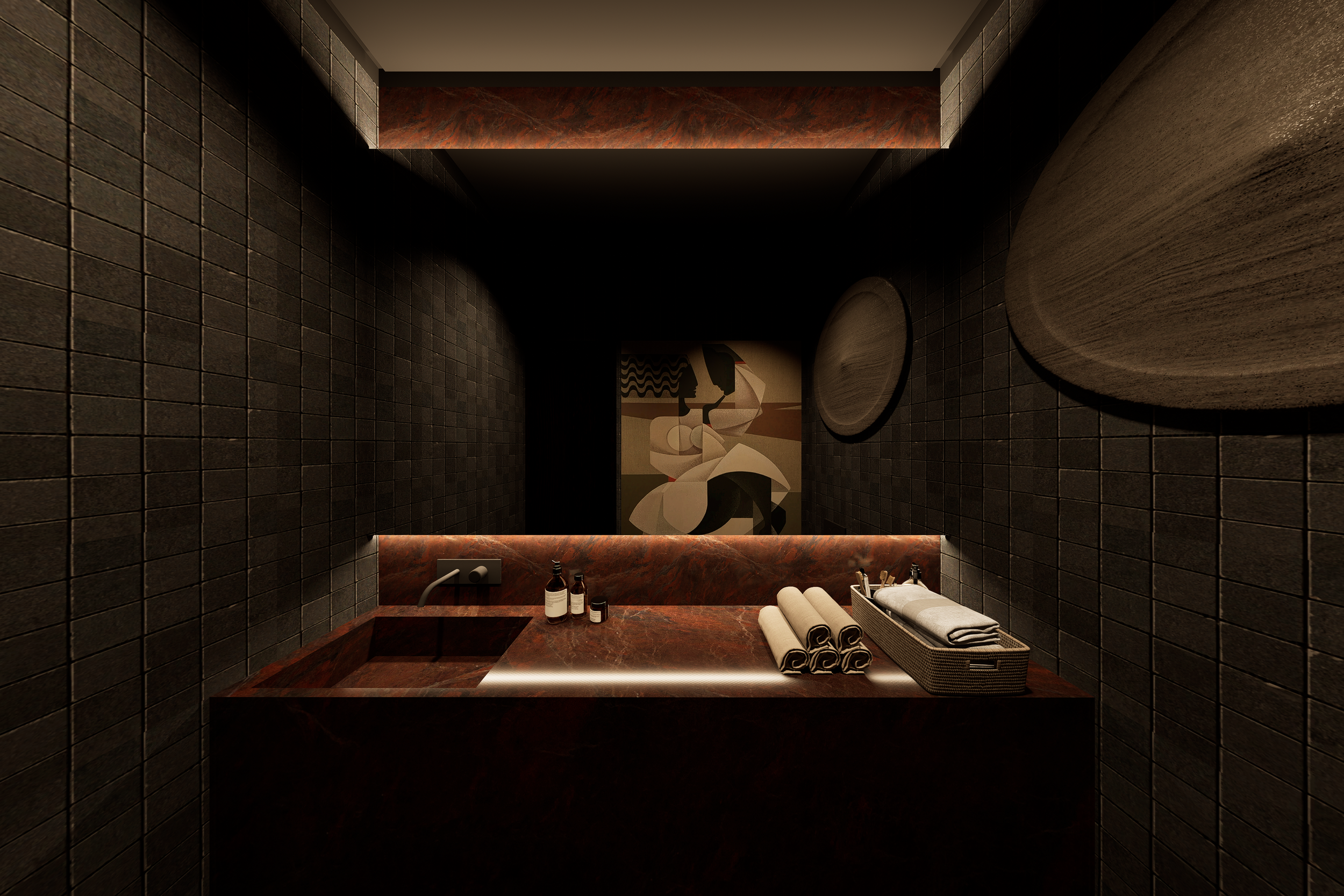
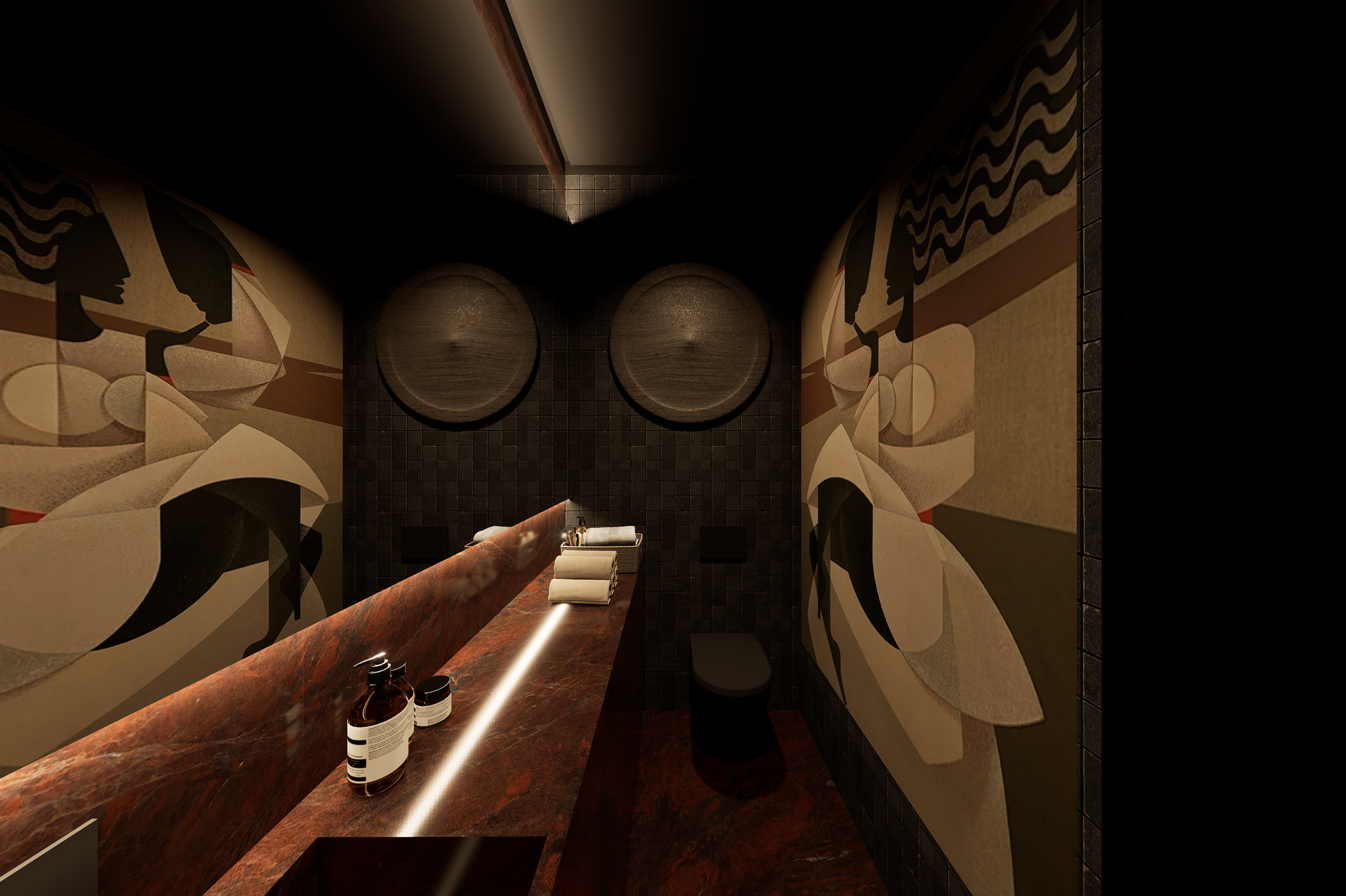
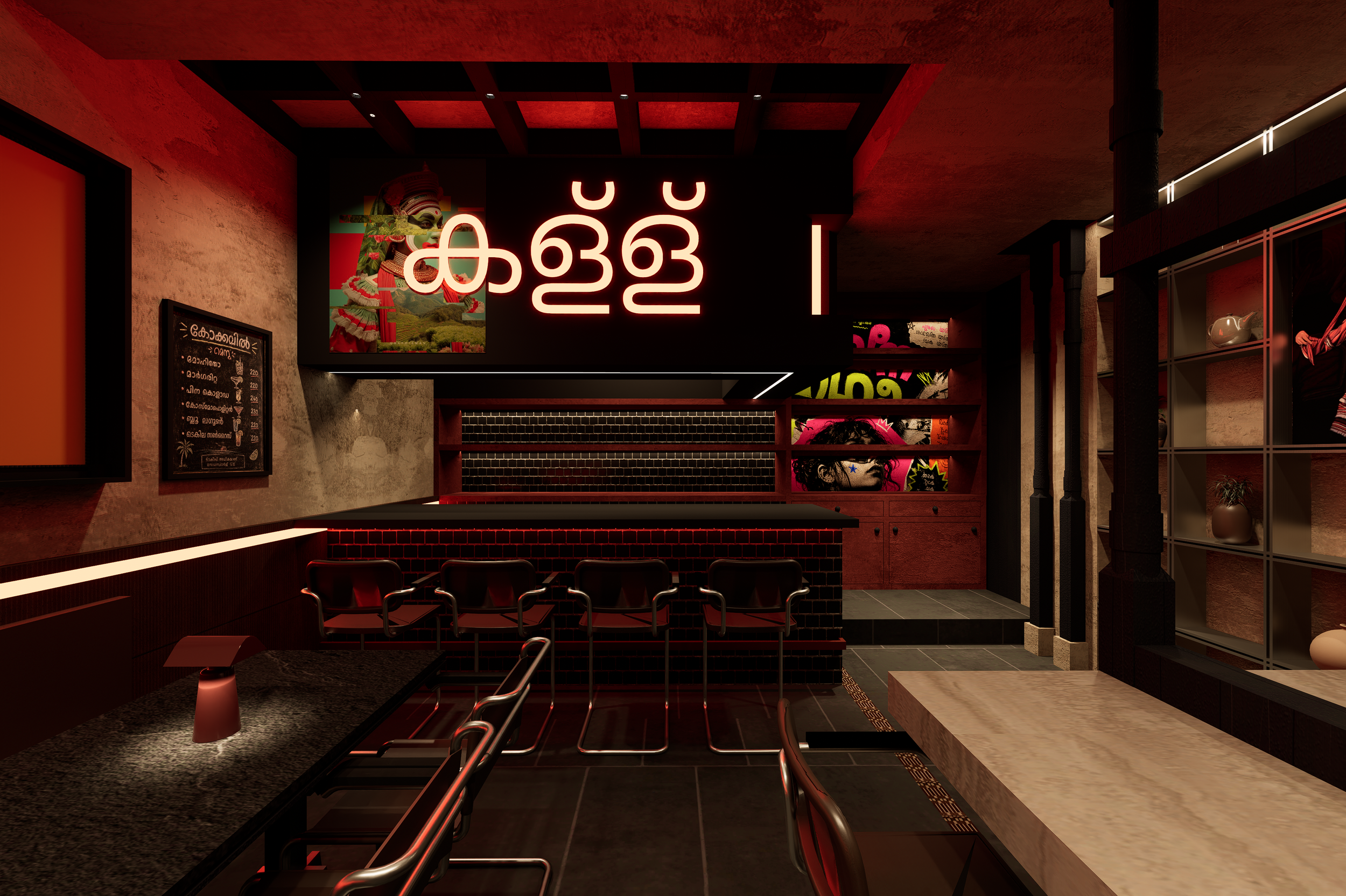
The final design moves beyond the restraint of the initial concept into something more energetic, nocturnal and contemporary. Deep reds, black surfaces, warm earth tones and dark timber create a rich, immersive atmosphere. Malayalam lettering becomes light. Artwork becomes a strong visual anchor. Shelving is populated with objects, bottles and artefacts. Red-stained joinery, dark tile, cane and stone bring together the familiarity of an old toddy shop with the sharper language of a contemporary bar.
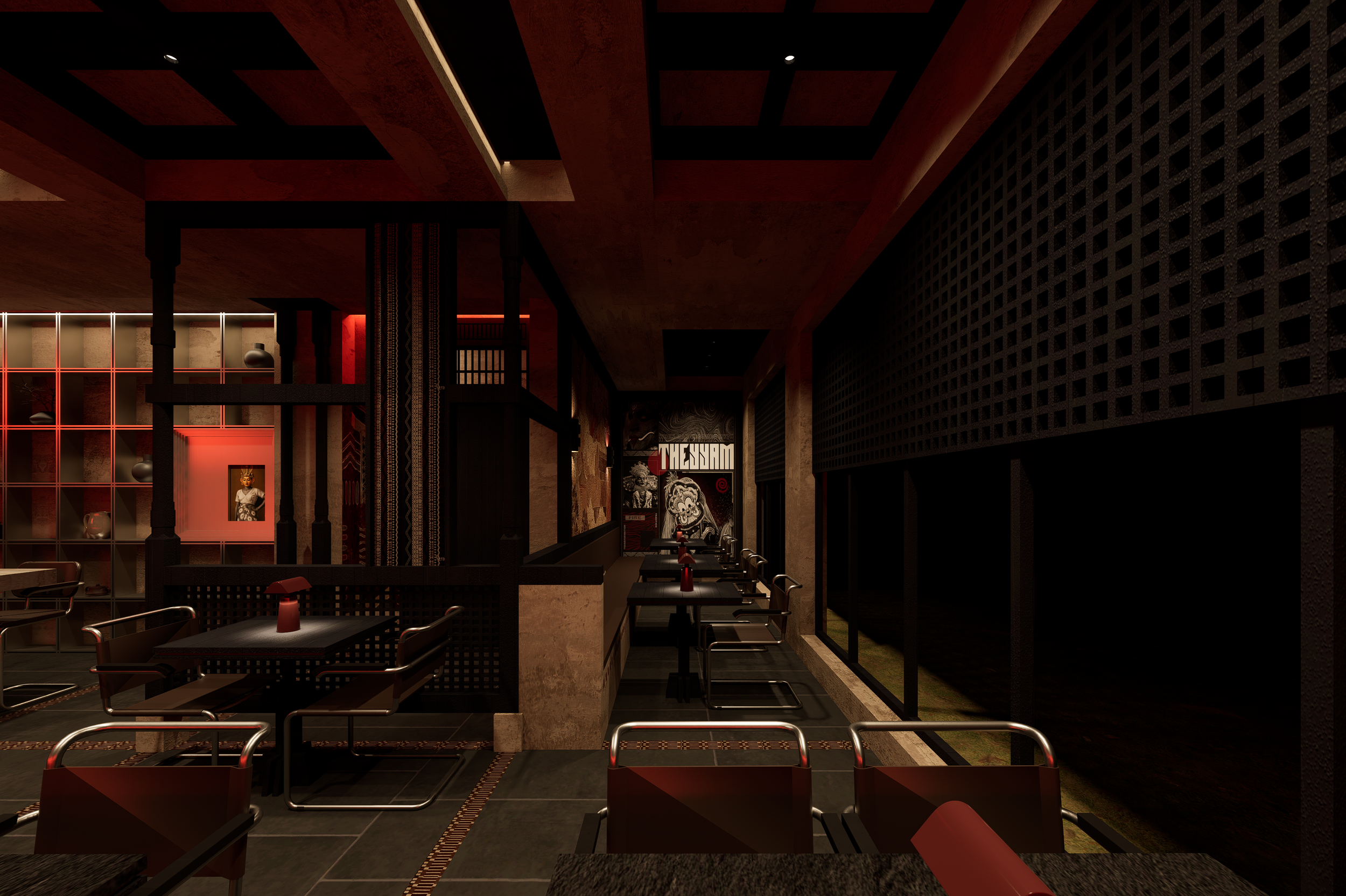
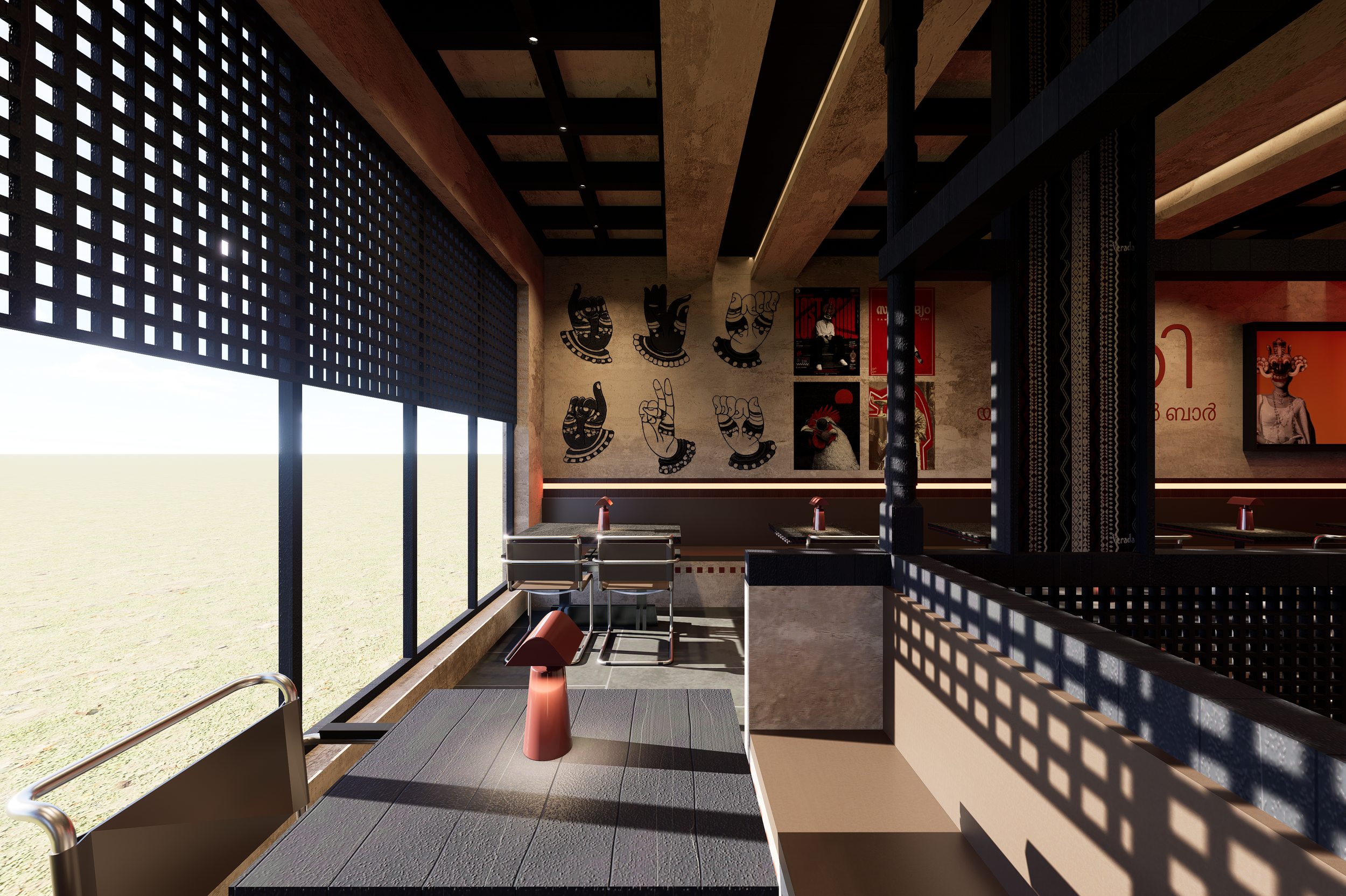
Beneath this visual intensity, the architecture remains disciplined. Dark structural frameworks organise the narrow floor plate, creating a sequence of smaller territories without fully dividing the space. These elements reinterpret the logic of Kerala’s verandahs, timber structures, shaded edges and heavy joinery rather than copying their form. They frame tables, carry shelving, filter views and create moments of intimacy, turning the restaurant into a series of interconnected rooms rather than a single dining hall.
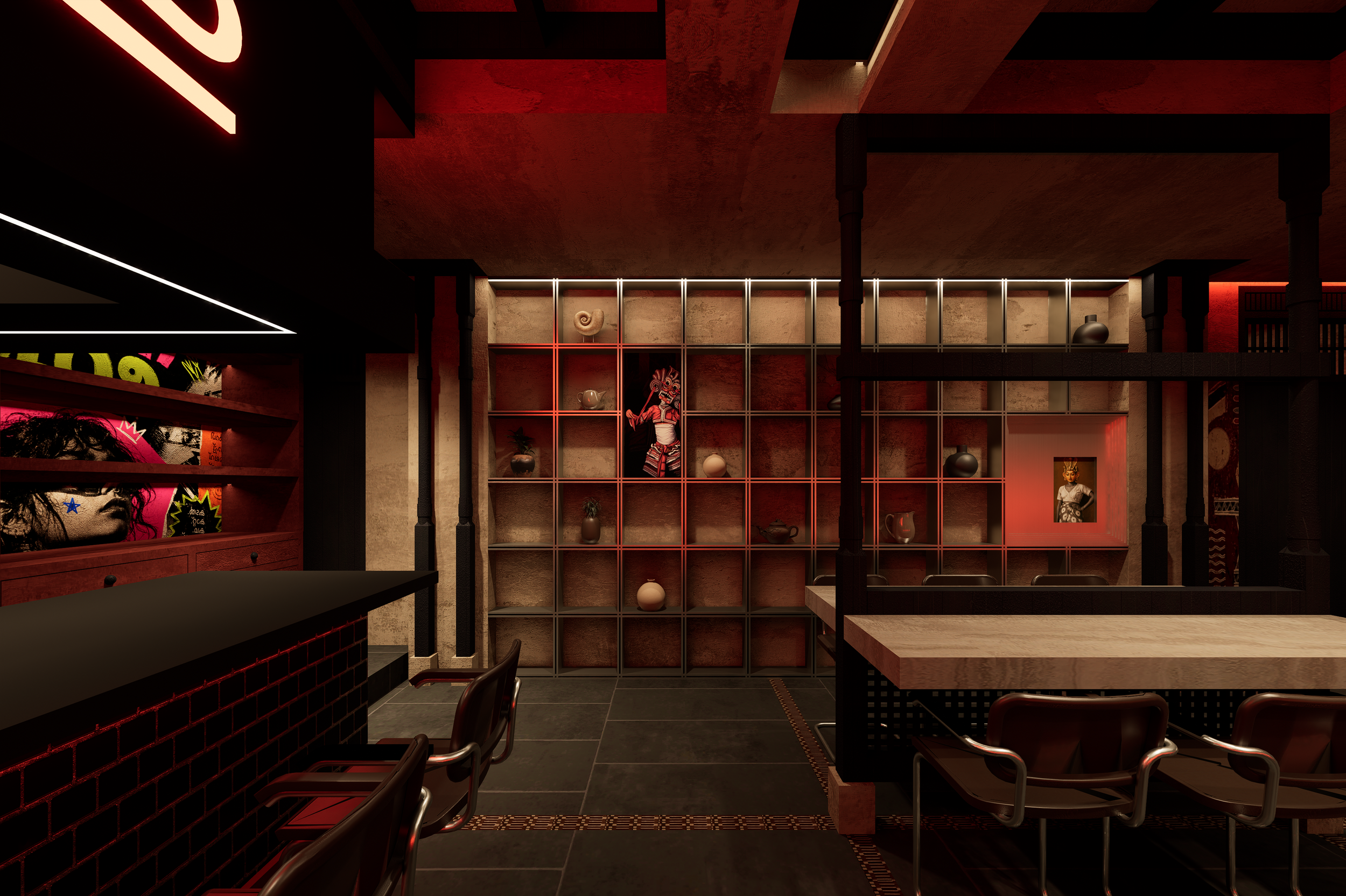
contemporary toddy shop
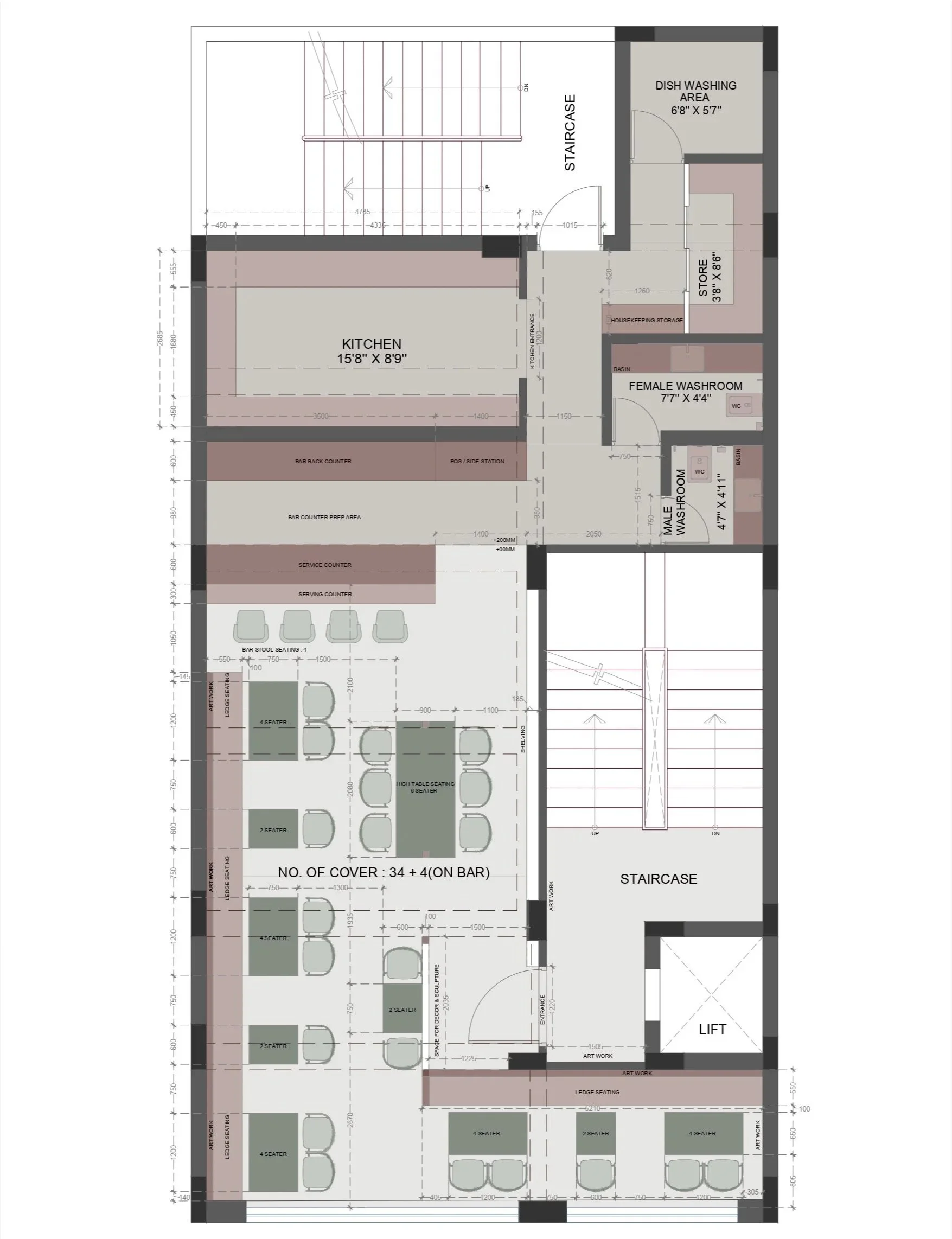
The programme is compact but layered. Dining areas, communal seating and the bar occupy the public foreground, while the kitchen, washing area, store and separate male and female washrooms are integrated into an efficient service sequence. The bar becomes the social and operational heart of Seri. Conceived as a contemporary interpretation of the toddy counter, it brings together preparation, drinking, service and conversation. Dark tile gives it weight, while red detailing, illuminated signage and displayed objects give it a more vivid presence.
The seating remains deliberately informal. Smaller tables accommodate intimate dining, longer edges allow groups to gather, and counter seating supports shorter visits and drinks. The different formats encourage a loose and changing social rhythm, echoing the collective nature of the toddy shop without replicating its traditional form.
Material and light give the interior its emotional depth. Timber, lime-textured walls, stone, cane, dark flooring and tile were chosen for their tactility and their ability to age through use. Warm, concealed lighting sits against these darker surfaces, allowing food, faces, artwork and objects to emerge gradually from shadow. The bar glows with greater intensity, while the dining areas remain intimate and atmospheric.
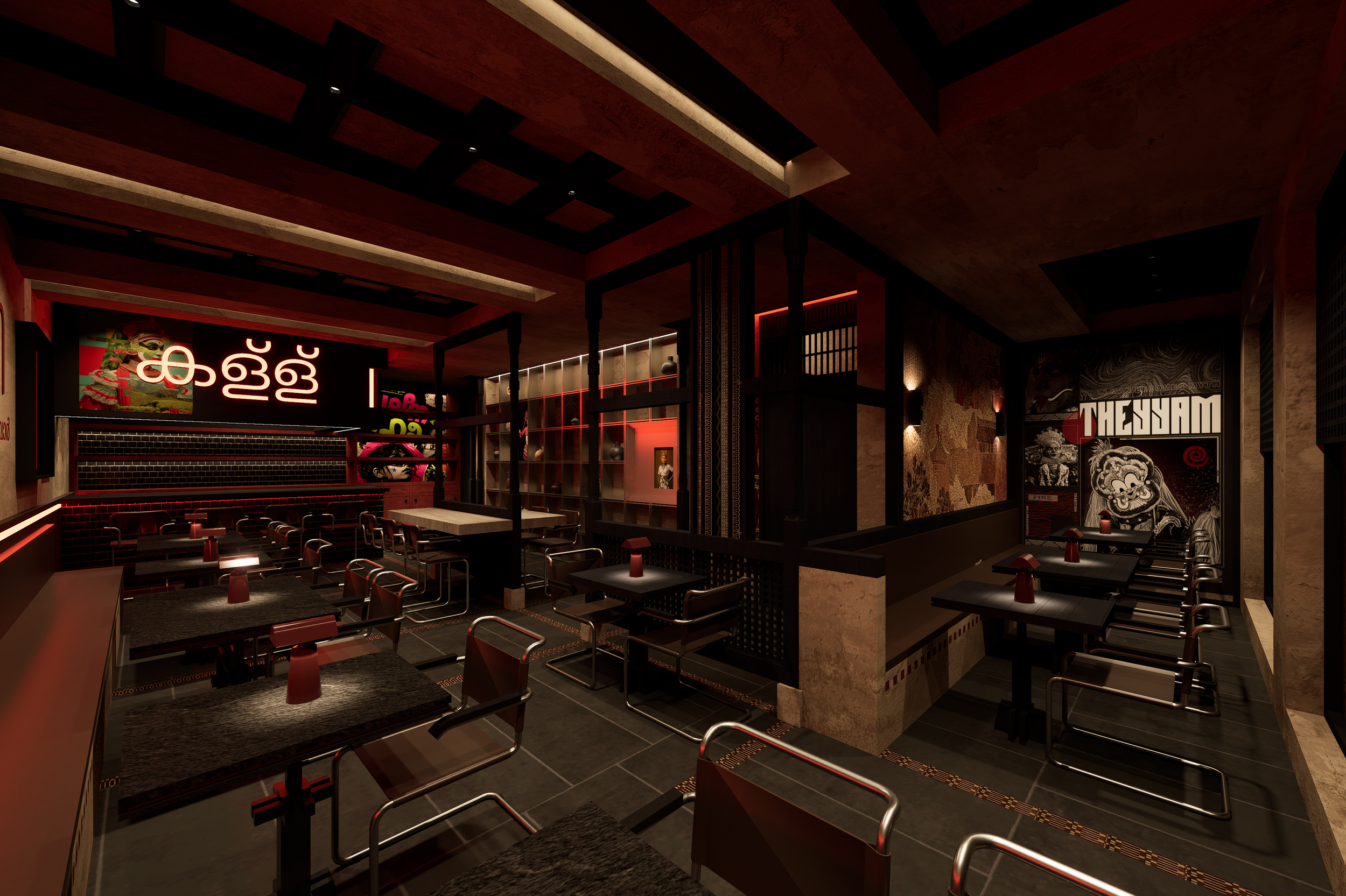
toddy counter becomes a place of theatre
Seri is ultimately not an exercise in recreating Kerala, but in allowing its memories to travel, shift and acquire new meaning. Familiar references are loosened from nostalgia and recast through a contemporary lens. Language becomes light, craft becomes structure, and the everyday toddy counter becomes a place of theatre, exchange and collective energy.
In Hauz Khas, Seri exists somewhere between recollection and reinvention. It carries the warmth, humour and informality of Kerala without attempting to imitate it. What remains is not a replica of a place left behind, but the feeling of one remembered vividly, reassembled in another city, and made alive again.